From early planning through move-in day, the home building process follows a series of well-defined phases. Understanding the typical stages of building a new home—including timelines, inspections, and key decision points—helps homeowners plan ahead, reduce stress, and make informed choices throughout construction. While every build is unique, most new home construction projects follow a similar process, making it easier to know what to expect from start to finish.
Phase 1: Planning & Design
Everything starts with defining your vision. This includes site selection, drafting designs, reviewing style preferences, and confirming the overall project scope. You’ll meet with architects or builders, choose layouts and finishes, obtain permits, and finalize a working budget. This phase often takes longer than expected, but time spent here pays off later by minimizing surprises. Multiple contractor bids and clear contracts help guarantee fair pricing and aligned expectations before construction begins.
Phase 2: Site Preparation & Foundation
Once plans are approved, the physical build begins. Crews clear the site, level the ground, and install trenches for utilities. Footings are set, followed by the foundation (typically poured concrete or block) along with required inspections. Weather can play a role at this stage and sometimes affect timelines, but proper inspections and code compliance make sure the home starts on solid ground.
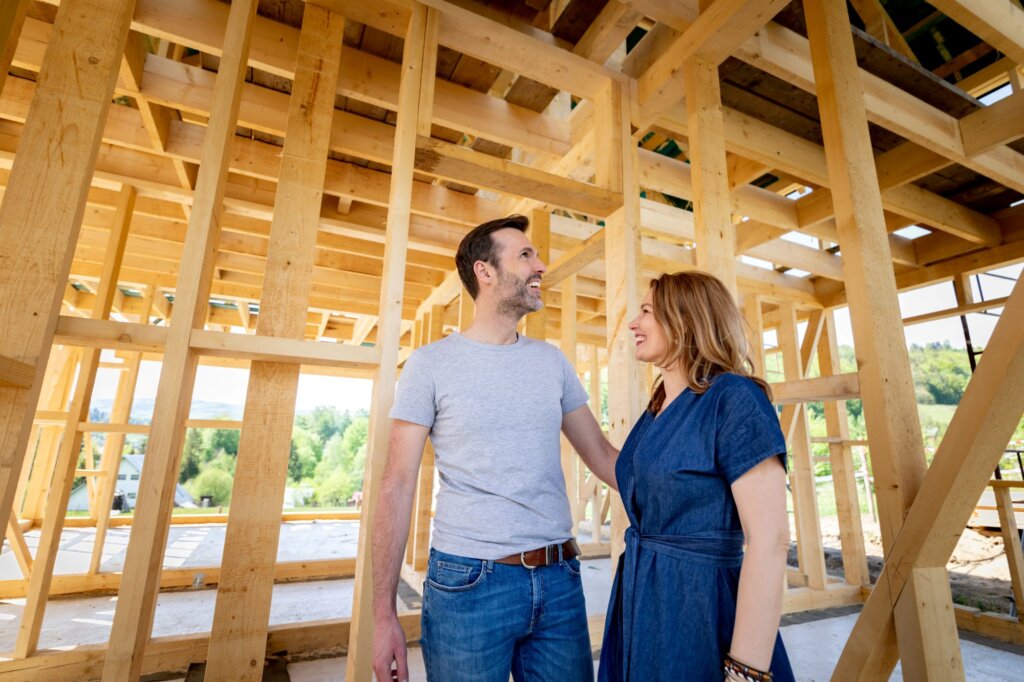
Phase 3: Framing & Exterior Shell
This is where the home truly takes shape. Framing creates the structural skeleton, followed by roof underlayment, windows, exterior sheathing, and weather barriers. Once the home is weather-sealed and “dried in,” interior work can begin with proper protection from the elements.
Phase 4: Rough-Ins (Plumbing, Electrical, HVAC)
Behind the walls, essential systems are installed—plumbing lines, electrical wiring, ductwork, and HVAC components. These systems are inspected before insulation and drywall are added. This phase is critical for long-term comfort, safety, and efficiency.
Phase 5: Interior & Exterior Finishes
With drywall complete, the home starts to feel finished! Cabinets, trim, tile, flooring, paint, countertops, fixtures, siding, and landscaping are installed next. Regular walkthroughs during this phase can help you confirm that the finishes match your initial selections, or give you enough time to adjust before the house is complete.
Phase 6: Final Inspection, Walkthrough, & Move-In
After a final inspection, homeowners will review the space with their builder and note any punch-list items. You’ll receive warranties, maintenance guidance, and system overviews so you know how everything works. Once final approvals are complete, it’s time to move in and make the space your own.
Your New Home Awaits
Building a home is an investment not just in money, but in planning, communication, and patience. Understanding each phase helps homeowners feel informed, prepared, and excited as their vision becomes a place they can truly call home.