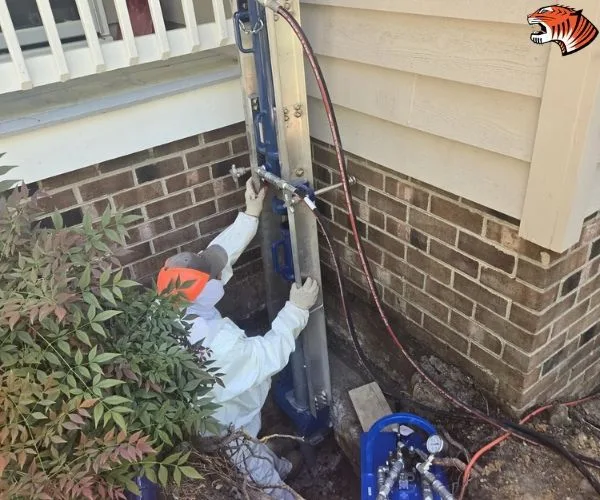
Foundation push piers are designed to provide deep structural support and, when properly selected, installed, and protected, can remain effective for decades. Their actual lifespan depends on soil conditions, installation quality, corrosion protection, drainage, and whether the cause of movement has been addressed. No responsible estimate promises a specific number of years without evaluating the property.
Why Push Piers Can Last for Decades
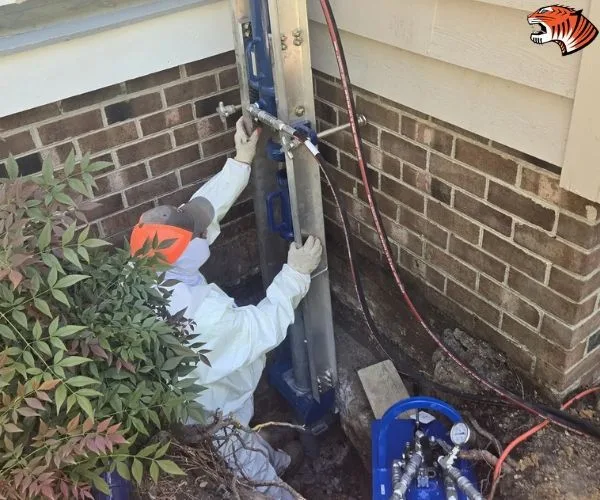
Foundation push piers are steel support systems designed to transfer a home's structural weight through weaker near-surface soils to more stable load-bearing soil or bedrock. Installed using hydraulic pressure and an engineered plan, they can provide support for decades. Their longevity depends on proper installation depth, soil conditions, pier capacity, corrosion protection, and the overall stability of the surrounding foundation.
Pier number, placement, capacity, depth, and configuration should reflect building loads and site conditions. A design suited to one home may not suit another, even nearby.
Richmond Conditions and Ongoing Care
Central Virginia properties experience heavy rainfall, summer heat, and seasonal soil-moisture changes. Clay-rich soils can shrink when dry and expand when wet. Poor grading, clogged gutters, leaking plumbing, and downspouts discharging beside the house can intensify moisture changes around footings.
Push piers provide structural support, not water management. Keep gutters clear, direct downspouts away from the foundation, maintain positive grading, and repair plumbing leaks promptly. Avoid repeatedly saturating one area through irrigation. These habits reduce avoidable stress, although they cannot correct every soil problem.
What Maintenance Is Actually Needed?
Steel piers generally need no routine mechanical servicing. Still, monitor the building. Photograph existing cracks, check for sticking doors or windows, and watch for renewed floor slopes or gaps. Changes do not automatically mean a pier has failed; seasonal movement, framing issues, or moisture may also contribute. Have concerns about changes assessed rather than adjusting yourself.
Warranties: Read Beyond the Headline
Warranty terms vary by contractor, product, and project. Ask what is covered: materials, workmanship, settlement, or specific performance outcomes. Clarify duration, transferability when selling, exclusions, maintenance obligations, and the process for requesting service. Ask whether coverage depends on installing all recommended piers or completing drainage work. Keep contracts, drawings, inspection notes, invoices, and warranty documents together.
Planning a Sound Repair
Tiger C Construction, LLC provides foundation repair in the Richmond area and lists foundation push piers among its offerings. Ask for a clear explanation of proposed support locations, installation approach, expected results, and engineering or permitting requirements that apply. The company also describes experience with foundation, basement, crawl-space, and drainage concerns.
For a closer look at project documentation, read Push Pier Foundation Repair: How Engineer Reports, Permits, and Inspections Work. It complements this durability discussion by explaining the planning and oversight that help homeowners understand a repair.
The takeaway: push piers can offer decades of support, but longevity is not automatic. Sound design, competent installation, sensible water management, and clear warranty terms all matter. If you notice settlement signs, arrange an evaluation with Tiger C Construction, LLC before movement becomes harder to diagnose.
Featured

Contact Tiger C Construction, LLC
Thanks, your message was sent to Tiger C Construction, LLC.