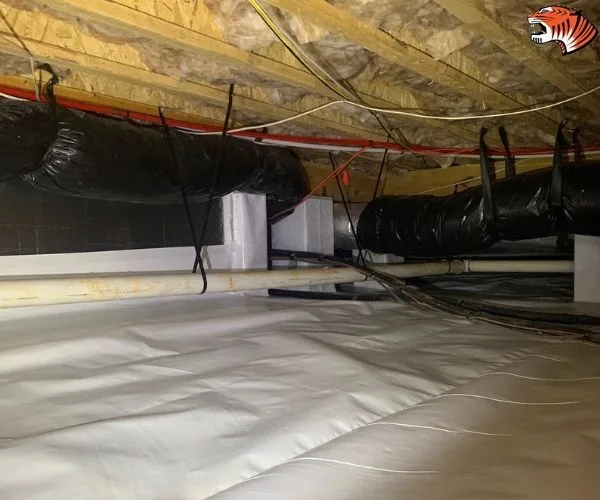
Crawl space encapsulation protects a home by limiting ground moisture, blocking humid outdoor air, and controlling damp conditions that encourage mold and wood decay. In Richmond, warm summers, humid air, and heavy rain can challenge foundations, making the space beneath a house an important part of home maintenance.
Why Crawl Spaces Become Damp
Crawl space encapsulation helps address moisture problems that develop when water vapor, humid outdoor air, and poor drainage affect the area beneath a home. Moisture enters from several directions. Bare soil releases water vapor, rainwater may collect around foundation walls, and humid air can enter through open vents. When warm air meets cooler pipes, ducts, or floor framing, condensation can form. A crawl space may stay damp even without an obvious leak.
Persistent moisture affects more than air quality. Floor joists, beams, and subfloors are commonly wood. When these materials remain wet, mold can develop and wood-decay fungi may weaken framing. Musty odors, visible growth, peeling insulation, and soft or discolored wood deserve attention.
How Encapsulation Controls Moisture
Creating a Continuous Barrier
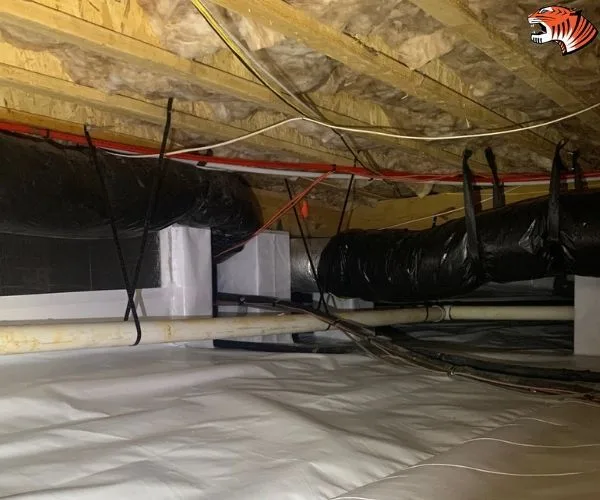
A properly installed system covers exposed soil with a durable vapor-retarding liner. It extends up foundation walls, with seams, edges, and penetrations sealed. This reduces vapor rising from the ground and limits humid outdoor air entering through vents and gaps.
Managing Humidity and Water
Encapsulation commonly includes sealing vents and openings and using a dehumidifier to control conditions. The liner is not a substitute for drainage: runoff, groundwater, or plumbing leaks must be corrected. Grading, gutters, drains, or a sump system may be needed, depending on the property.
When moisture sources are addressed and humidity controlled, wood framing has a better chance to remain dry. Mold needs moisture to grow, so reducing persistent dampness discourages new growth. Existing mold and damaged wood still need assessment and remediation; covering them does not make them disappear.
Richmond Homes Need a Whole-Space Approach
Central Virginia’s humid summers can make vented crawl spaces vulnerable. Routine checks can reveal drainage problems before wood damage develops. After rainy weather, check that downspouts discharge away from the foundation and soil slopes away from the house. Watch for standing water, musty smells, ductwork condensation, or unusually springy floors. Avoid entering a confined crawl space if water, structural damage, or unsafe wiring is present.
A basic ground vapor barrier and full encapsulation are different. A ground sheet mainly slows soil vapor; a complete system also addresses wall coverage, air leakage, and humidity. The right option depends on moisture readings, drainage, existing materials, and framing condition.
For more context, read “Crawl Space Encapsulation vs. Vapor Barrier: What Every Homeowner Should Know”.
A Practical Next Step
Tiger C Construction, LLC serves Richmond-area homeowners with crawl space and moisture-control work. An inspection can identify water entry, wood needing repair, and suitable measures before the space is sealed.
The takeaway: encapsulation manages moisture at its sources rather than simply covering damp soil. If your crawl space smells musty or shows water damage, visit Tiger C Construction, LLC to learn about an evaluation and appropriate options.
Featured


Contact Tiger C Construction, LLC
Thanks, your message was sent to Tiger C Construction, LLC.