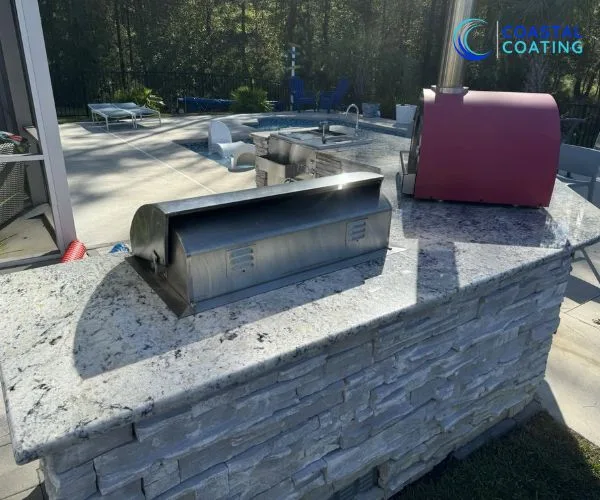
An outdoor kitchen coating should be inspected annually, but it does not automatically need yearly reapplication. The schedule depends on coating type, surface material, installation quality, cleaning habits, and exposure to sunlight, moisture, spills, and heat. In Carolina Forest, South Carolina, humid summers, heavy rain, coastal air, and strong ultraviolet exposure make routine checks worthwhile.
Why Local Conditions Matter
Outdoor kitchen coating protects cooking surfaces from stains, moisture, grease, and weather exposure. In Carolina Forest, SC, humidity, heavy rain, strong sunlight, and coastal air can gradually wear down protective finishes. Frequent cooking also exposes countertops and grill surrounds to oils, sauces, and heat.
Covered surfaces may retain protection longer than areas exposed to direct sunlight or frequent cleaning, making regular inspections important.
When Is Reapplication Necessary?
Watch for Changes in Performance
Look at how the surface behaves instead of relying only on a calendar. Water that once beaded may begin spreading or soaking into the finish. Grease and food stains may become harder to remove, while dull patches, discoloration, peeling, or visible wear can signal that the coating needs assessment.
One water spot does not necessarily mean protection has failed. Clean the surface with mild soap and water, let it dry, and check whether the change remains. Avoid testing the finish with harsh chemicals or abrasive pads.
Follow Product Guidance
Ceramic, epoxy, and polyurethane systems have different properties and maintenance expectations. Manufacturer instructions and installer recommendations should determine inspection intervals and maintenance treatments. Some systems may need periodic top-up products; others require surface preparation and reapplication when wear becomes evident. Recoating over grease, residue, or a failing layer can compromise adhesion.
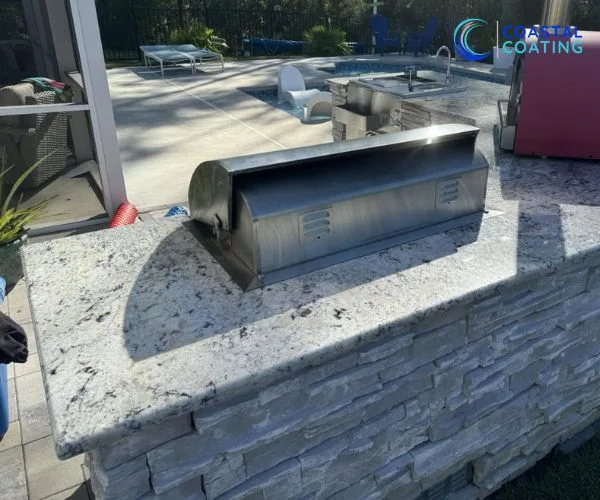
Habits That Preserve Protection
A simple routine can reduce avoidable wear:
Wipe spills promptly, especially oil, wine, citrus, and tomato-based sauces.
Wash surfaces with mild soap and water.
Avoid abrasive pads, strong solvents, and unapproved cleaners.
Use suitable covers when the kitchen is idle.
Place hot cookware on heat-safe mats or designated surfaces.
Inspect seams, edges, and exposed metal for chips or corrosion.
When Professional Advice Helps
The related article, “How Do Professional Outdoor Kitchen Coating Systems Differ From DIY Protective Finishes,” explains why preparation, product compatibility, and application technique matter. An assessment can distinguish normal buildup from coating deterioration.
Coastal Coating serves Carolina Forest and nearby communities with outdoor kitchen coating solutions. Its process includes evaluating surfaces, cleaning and preparing them, applying a selected coating, and checking the finished work. The company lists ceramic, epoxy, and polyurethane options, with recommendations based on surface needs and local conditions.
Protect the Investment
Schedule an annual inspection, clean gently throughout the year, and reapply only when the coating’s condition and product guidance indicate it is necessary. If stains no longer wipe away easily or weather exposure has visibly changed the finish, ask Coastal Coating about an assessment and suitable maintenance plan for your kitchen.
Featured

Contact Coastal Coating
Thanks, your message was sent to Coastal Coating.