
Ceramic coating can repel water unevenly across one body panel because the coating, underlying paint, and surface contamination may not be uniform. One area might form tight water beads while another allows water to spread into wider patches. This does not automatically mean the coating has failed. Residue, grime, uneven preparation, and localized wear can all affect water behavior.
What Causes Uneven Water Beading?
Ceramic coating changes how water interacts with automotive paint. When the surface is clean and the coating performs as expected, water may bead or move away more readily. However, several factors can create inconsistent results across a hood, door, or fender.
Can Dirt and Residue Affect the Coating?
Road film, pollen, mineral deposits, and oily contamination can collect on certain areas. These substances may interfere with water movement, making one section appear less hydrophobic than another. In Clayton, North Carolina, seasonal pollen and rain can contribute to surface buildup, especially on vehicles parked outdoors.
Uneven behavior can also result from inconsistent preparation or coating application. If the paint was not cleaned thoroughly before application, or the product was spread unevenly, different sections may respond differently to water.
Does Poor Water Beading Mean Ceramic Coating Has Failed?
Not necessarily. Water behavior provides clues about a coated surface, but it cannot confirm coating condition by itself. Dirt and mineral residue can temporarily reduce visible beading even when protective properties remain.
Start by washing the vehicle with a suitable automotive shampoo and clean microfiber wash tools. Rinse thoroughly and observe the panel again under similar conditions. Avoid aggressive scrubbing or harsh chemicals that may affect the coating.
If uneven water behavior continues after cleaning, a detailer can inspect the finish for contamination, application inconsistencies, or localized deterioration. The appropriate solution depends on the cause.
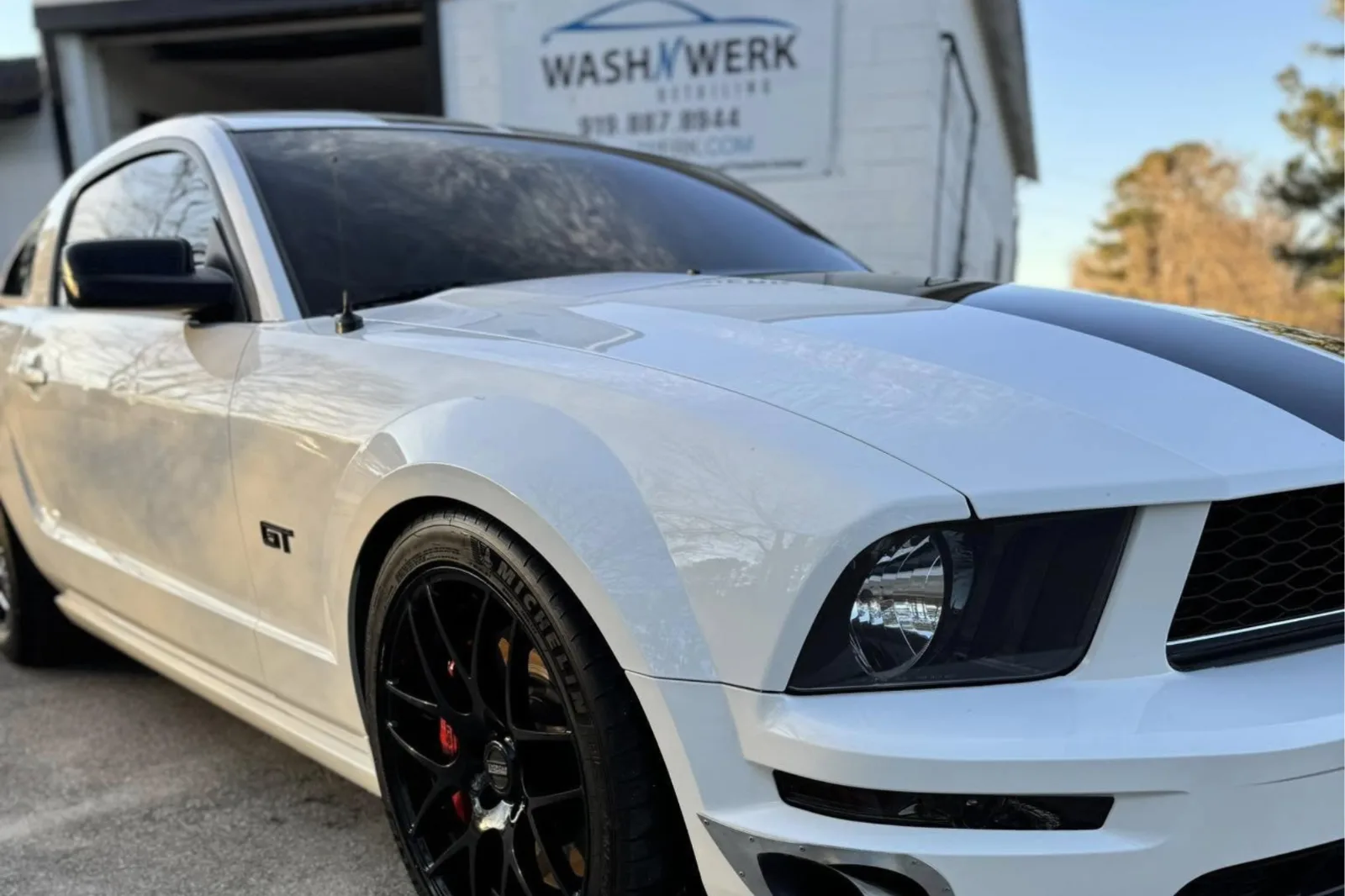
How Local Conditions Affect Coated Vehicles
Clayton drivers encounter rain, pollen, construction dust, and road grime during everyday travel. These contaminants accumulate differently across horizontal and vertical surfaces. A hood may collect more airborne debris than a door, while evaporating water can leave mineral deposits on either surface.
Regular washing helps remove buildup and makes changes in water behavior easier to assess.
Can Maintenance Products Change How Ceramic Coating Repels Water?
Waxes, spray sealants, drying aids, and cleaning products can leave residues that change how water behaves on coated paint. These products may temporarily alter beading or create uneven patches, making it difficult to distinguish residue from localized coating wear. Reviewing maintenance products can help identify the cause. Learn more in What Happens When Ceramic Coating Meets Residue From Incompatible Maintenance Products.
A Practical Approach to Ceramic Coating Care
WashNWerk Detailing and Ceramic Coatings helps vehicle owners maintain their finishes. Understanding why water behavior changes prevents owners from assuming every weak bead signals coating failure.
The Takeaway
Uneven water beading may indicate contamination, application differences, or localized wear. Clean the surface first and seek an inspection if the difference persists. For more information, visit WashNWerk Detailing and Ceramic Coatings.
Featured

WashNWerk - Car Detailing, Ceramic Coatings, and Paint Protection Film
Rolesville, NC
4.7 586 on Google
Rolesville, NC
Contact WashNWerk - Car Detailing, Ceramic Coatings, and Paint Protection Film
Thanks, your message was sent to WashNWerk - Car Detailing, Ceramic Coatings, and Paint Protection Film.