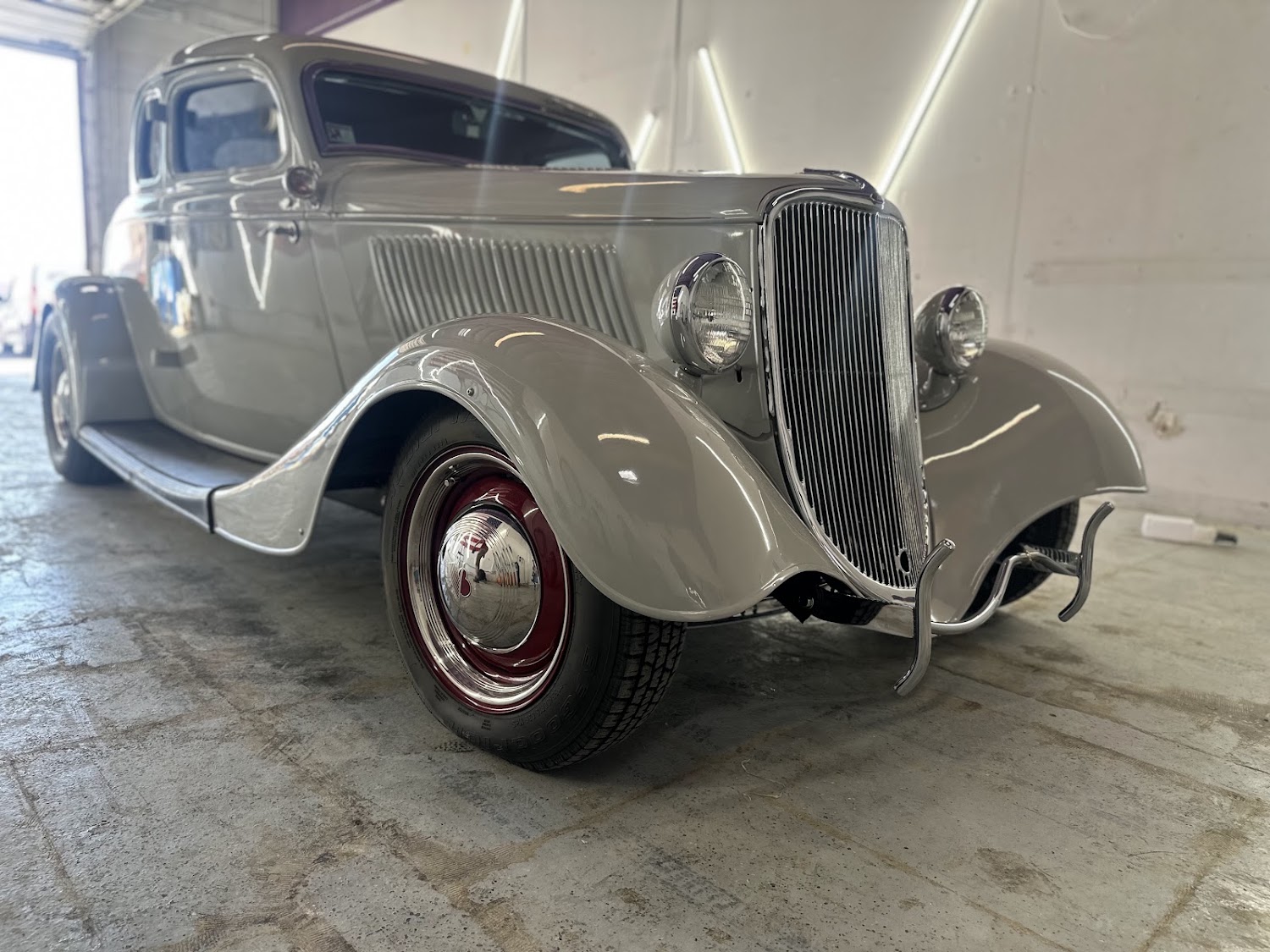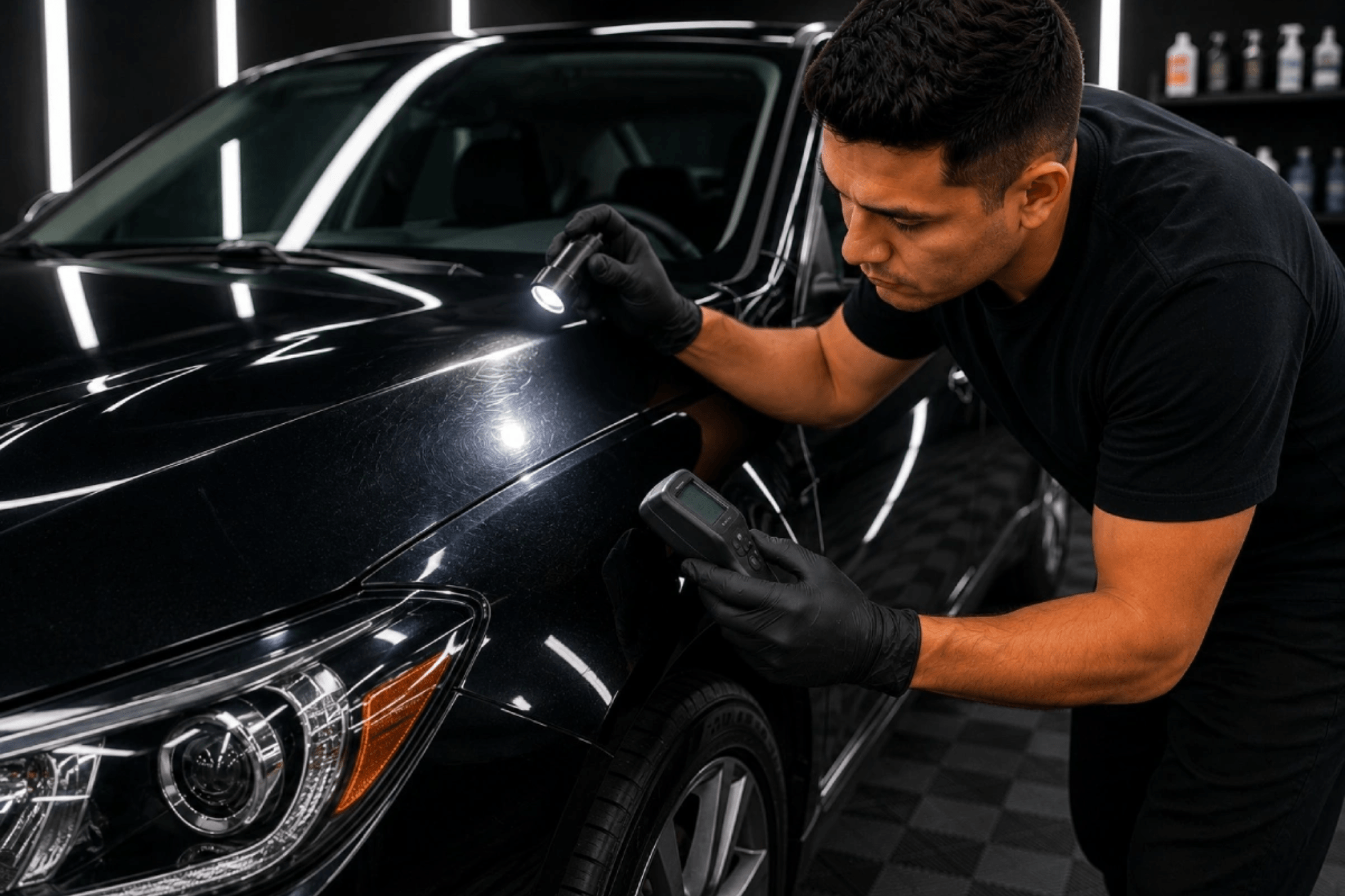
Paint correction can improve oxidation by carefully refining the damaged upper portion of the clear coat rather than aggressively removing large amounts of paint. The process relies on controlled polishing, appropriate pad and compound selection, and an assessment of paint condition before correction begins.
For vehicles in Corrales, NM, prolonged sun exposure and dry, dusty conditions can contribute to oxidation and surface deterioration. Over time, paint may develop a chalky, hazy, or faded appearance as environmental exposure affects the finish.
What Causes Automotive Paint to Oxidize?
Paint Correction can address the dull, weathered appearance associated with oxidation by refining the affected surface. Oxidation occurs when prolonged exposure to oxygen, sunlight, and environmental conditions contributes to deterioration of the paint surface. UV radiation can accelerate the breakdown of exposed finishes, particularly when a vehicle receives limited protection or maintenance.
Oxidized paint may look dull because its surface no longer reflects light as evenly as a healthier finish.
Why Does Clear Coat Thickness Matter?
Modern automotive paint systems generally include a clear coat above the colored base coat. This transparent layer provides protection and contributes significantly to gloss.
Because the clear coat has finite thickness, correction should not simply involve removing material until the surface looks perfect. Excessive polishing can unnecessarily reduce remaining clear coat and potentially compromise the finish.
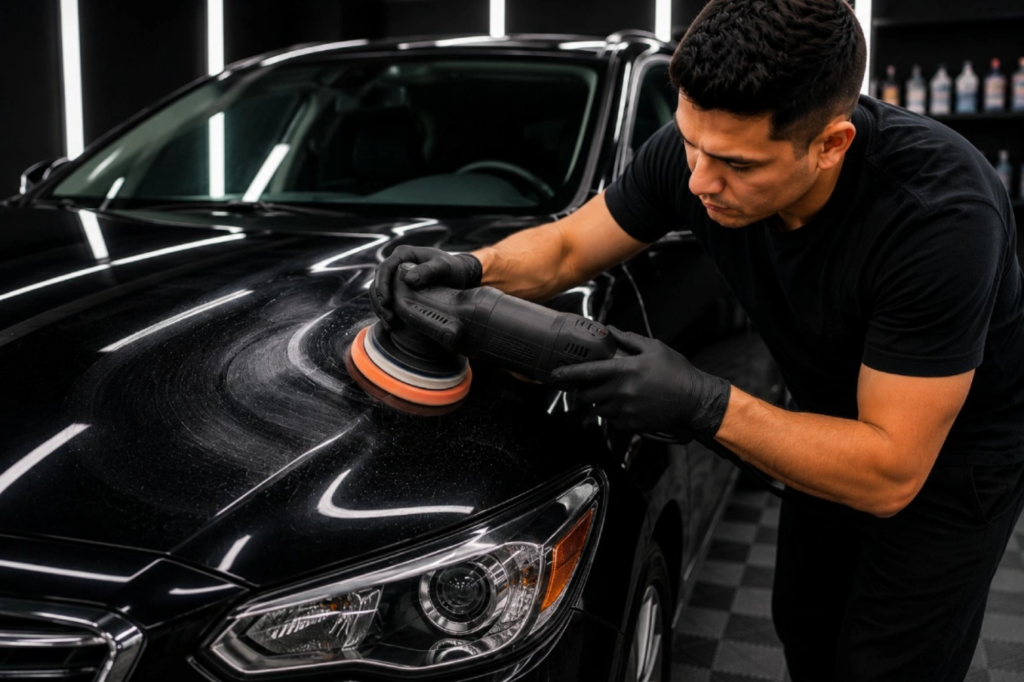
How Does Paint Correction Control Material Removal?
A measured approach begins with inspecting the paint and identifying the severity of oxidation and other defects. A detailer can then select a polishing combination appropriate for the condition rather than automatically using the most aggressive process.
What Determines the Correction Approach?
Factors can include:
- Severity and location of oxidation
- Existing scratches and surface defects
- Paint condition and previous polishing history
- Type of polishing compound and pad
- Amount of correction realistically achievable
The objective is controlled improvement, not necessarily the removal of every imperfection.
Why Does Corrales Sun Exposure Matter?
Corrales vehicles can face intense sunlight, heat, dust, and airborne particles during everyday use. These conditions can gradually affect an unprotected exterior, especially when a vehicle spends significant time outdoors.
Regular washing, appropriate surface protection, and avoiding abrasive cleaning methods can help reduce additional wear after correction.
A Local Perspective on Paint Correction
On The Spot Automotive Detailing provides vehicle detailing services for local drivers seeking to improve and maintain exterior finishes. A careful assessment of oxidation can help determine whether polishing is appropriate and how much correction the existing paint can reasonably support.
The Takeaway
Paint correction addresses oxidation through controlled surface refinement rather than unnecessary removal of the clear coat. Evaluating the finish first allows the correction process to balance improved clarity with responsible material preservation.
For drivers in Corrales considering paint correction for an oxidized finish, On The Spot Automotive Detailing provides a local resource for professional exterior care.