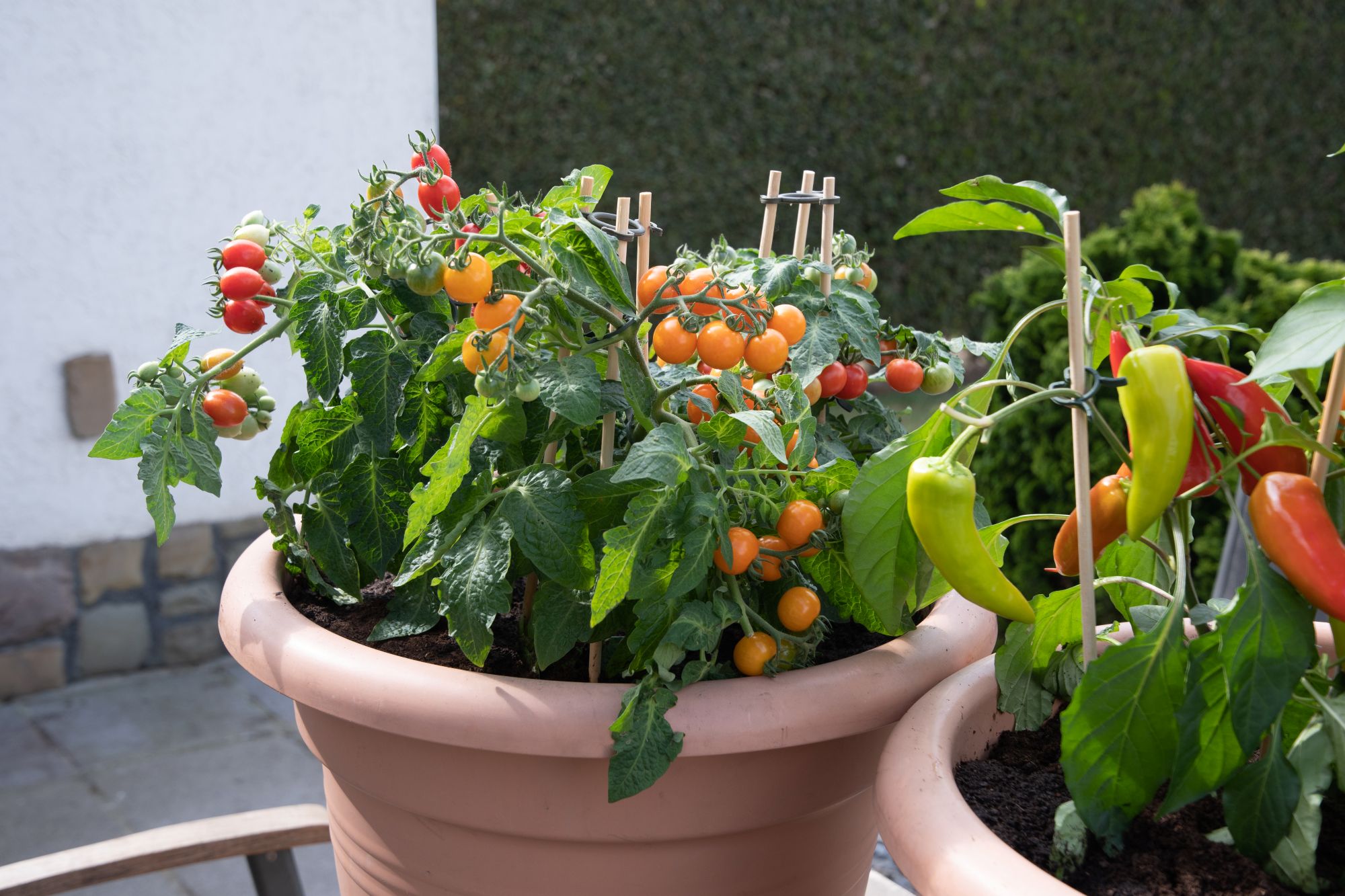
When you don't have a lot of outdoor space around your home, you might think you don't have room to garden. But a small patio, balcony, porch, or even corner of the backyard can have plenty of gardening potential.
Container gardens make it possible to grow herbs, vegetables, and flowers without a traditional garden bed. Trellises, hanging baskets, and other vertical setups can stretch that space even further. Before buying plants, take a closer look at your sunlight, available room, and how much time you want to spend watering and maintaining your garden.
Start by Watching the Sun
Sunlight will shape nearly every gardening decision, so spend a day or two checking your space at different times. Your balcony might get bright morning sun but become shaded by a building or tree for most of the afternoon. You should also note whether the area gets unusually hot, stays windy, or receives reflected heat from walls and/or pavement.
Fruiting plants, such as tomatoes and peppers, generally perform best with at least six hours of direct sunlight each day. Leafy vegetables, including lettuce and kale, prefer some shade. Once you understand the light in your space, choosing plants becomes much easier.
Choose Plants That Fit the Space
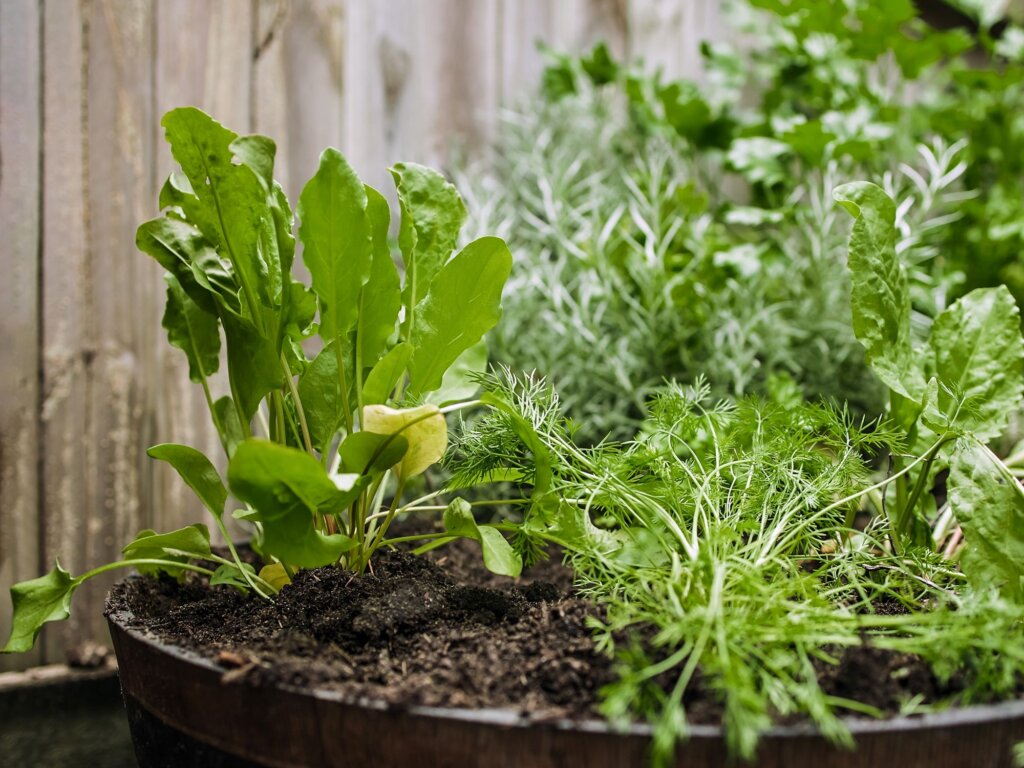
A small garden works best when the plants don't need to compete for space. Herbs (like basil, parsley, thyme, and chives) are good candidates for containers. Leafy greens and radishes can also fit comfortably in smaller setups. Tomatoes, peppers, eggplants, beans, and cucumbers are possible too, as long as they receive enough sun and have adequate root space.
Some plant varieties can grow quite large! When shopping for seeds or transplants, look for descriptions like "compact," "dwarf," "bush," or "determinate." These varieties generally take up less room than plants with sprawling growth habits.
Instead of squeezing in as many plants as possible, focus on what you'll actually enjoy. If you use basil and peppers every week, two healthy containers can yield more than six overcrowded ones.
Pick Containers With Enough Room and Drainage
Container size has a huge impact on plant health. Small herbs and greens can grow in relatively modest pots, while larger vegetables need more root space. Larger containers also hold moisture longer, which can make watering a little more forgiving.
Whatever container you choose, make sure excess water can drain easily. Roots need both water and oxygen, and soil that stays saturated for too long can cause problems.
Container material also affects how quickly the soil dries. Plastic tends to retain moisture longer, while porous materials like terracotta drain faster. Heavy pots offer more stability for tall plants, but they can be harder to move once filled.
If you're gardening on a balcony or another elevated structure, keep the weight of large containers in mind. Renters may also want to check their lease or property rules before attaching trellises, planters, or hanging baskets to railings or walls.
Use Potting Mix
It may be tempting to fill containers with soil from the yard, but garden soil often becomes too dense in a pot. A quality potting or soilless mix creates a lighter environment for roots while still holding moisture and nutrients. It also drains more predictably.
Also, check the bag before adding fertilizer. Some potting mixes already contain plant food, so you likely don't need to fertilize right away.
If you're reusing old containers, clean them before planting and make sure drainage holes aren't blocked.
Make the Most of Vertical Space
When floor space is limited, consider making use of your vertical space. Pole beans, peas, cucumbers, and other vining plants can grow along trellises, cages, fences, or sturdy supports. Hanging baskets and plant shelves can also free up room below.
Make sure you install these supports early, before the roots get established and vines start to wander in every direction. The strength of your supports is also important. A mature cucumber, tomato, or bean plant can become surprisingly heavy, especially once it's carrying fruit!
You still need to think about space and placement when you're planting vertically. Depending on where the sun travels, tall plants might cast shade on shorter ones. Vertical gardening works best when it gives plants more room instead of turning a small area into a crowded wall of greenery.
Expect Containers to Need More Frequent Watering
Container gardens are compact, but they still need regular care. Potted plants can dry out faster than plants growing in the ground because they have less soil available to hold moisture. During hot or windy weather, some containers may need water every day.
What you want to avoid is relying entirely on a watering schedule. Check your potting mix with your hand instead. When the soil is drying out, water thoroughly enough for moisture to reach the root zone and begin draining from the bottom of the container. Empty standing water from saucers when necessary so plants aren't sitting in saturated soil.
Small pots also dry out much faster than large ones. If you travel often or know you'll forget to water every day, fewer large containers might fit your situation better than a collection of small planters.
Feed Container Plants as They Grow
Plants growing in containers have access to a limited supply of nutrients, and regular watering also carries some nutrients out through drainage. Over time, many container gardens will benefit from fertilizer.
How often you fertilize typically depends on the plant, the potting mix, and the fertilizer you're using. Some potting mixes already contain slow-release fertilizer, so be sure to follow the product instructions instead of adding extra in hopes to speed up growth.
Avoid Overcrowding
When space is scarce, every empty inch can look like an opportunity for another plant. However, crowding often creates more plant stress instead of more produce. Plants still need room for roots, leaves, and air circulation.
Too many plants in one container also means faster competition for water and nutrients.
Give each plant enough space to reach a healthy mature size. You'll likely get more enjoyment from a few thriving plants than a large collection that's constantly struggling.
What If Your Space Doesn't Get Much Sun?
A shady balcony or patio still offers gardening possibilities. Leafy vegetables generally tolerate lower light better than fruiting crops such as tomatoes and peppers. Many ornamental plants also prefer partial shade.
Start by figuring out how many hours of direct sun the area actually receives. "Shady" can mean anything from a few hours of morning sun to almost no direct light at all. Plant labels and reliable growing guides can help you match varieties to those conditions.
If a favorite vegetable requires more sun than your space provides, choosing something better suited to the location will usually be less frustrating than trying to force it to grow.
Common Small-Space Gardening Mistakes
Many early gardening frustrations can be attributed to these small-space mistakes:
- Buying plants before checking how much sunlight the space gets
- Choosing containers that are too small
- Using pots without adequate drainage
- Filling containers with dense soil
- Packing too many plants into one pot
- Underestimating how quickly containers dry out
- Waiting too long to add stakes, cages, or trellises
- Choosing sprawling varieties when compact ones are available
- Planting more than you realistically have time to maintain
Most of these problems are easier to avoid than to fix later. Planning ahead gives your plants a better chance and makes the garden easier to care for.
Frequently Asked Questions
What vegetables are easiest to grow in small spaces?
Herbs, leafy greens, and radishes are approachable choices for many gardeners. Compact peppers and tomatoes can also work well if they have enough sunlight and root space.
The easiest option for your garden depends on light, weather, container size, and how consistently you're able to water.
Can vegetables really grow well in pots?
Yes! Many vegetables grow successfully in containers when the pot is large enough and the plant receives appropriate light, water, and nutrients.
Can I use regular soil in containers?
Straight garden soil isn't ideal for most container gardens because it can become dense and drain poorly. Use a potting or soilless mix made for containers instead.
Can I grow vegetables vertically?
Yes. Pole beans, peas, cucumbers, and other climbing plants can grow on trellises, cages, or sturdy supports. Vertical growing is a great option when ground or floor space is limited.
How do I know when my containers need water?
Check the growing mix regularly with your hand instead of watering strictly by the calendar. Container size, material, weather, sunlight, and plant type all affect how quickly the soil dries. During hot weather, daily watering is common.
Where can I find advice for my local growing season?
Your local Cooperative Extension service is a good source for regional planting dates, recommended varieties, pest information, and other gardening guidance. You can also find gardening experts at local nurseries and garden centers.
The Bottom Line
Small-space gardening works best when you plan around what your outdoor area naturally offers. Pay attention to available sunlight, give plants enough room to grow, and choose containers that fit both the plants and your routine. From there, start with a few varieties you're genuinely excited to take care of.
You don't need a large garden to reap the rewards. A sunny pot of herbs, a few homegrown tomatoes, or a balcony filled with flowers can make even a modest outdoor space feel more comfortable and personal.
This community resource is made possible through the generous support of local WhirLocal sponsors.