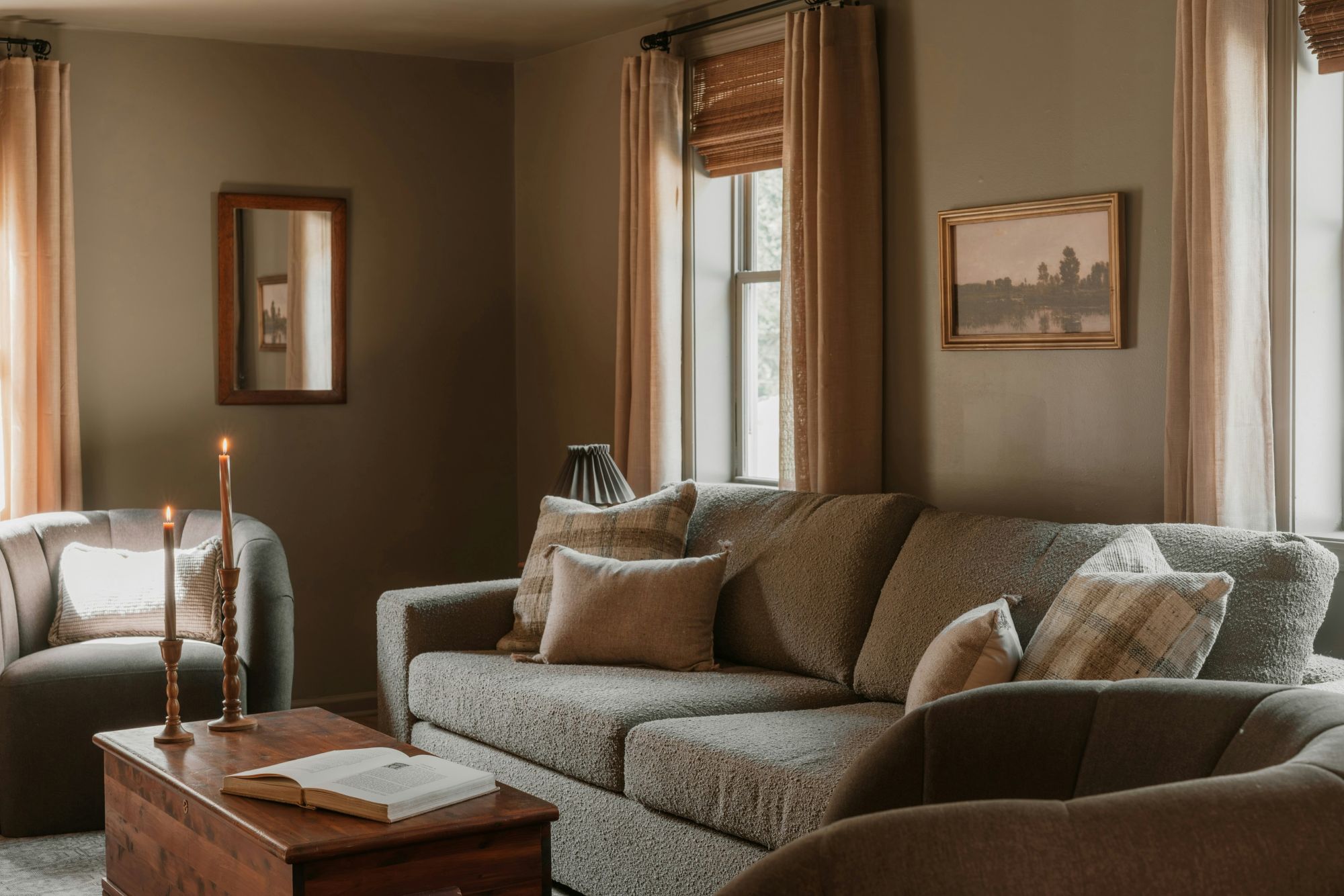
Curtains can change the feel of a room much more than people expect. They soften hard edges, add color and texture, control light, and can even make windows look taller or wider. However, the "wrong" pair can feel too short, too heavy, or too disconnected from everything else in the space.
You don't need to know every type of curtain or follow a specific design trend; following a few general rules about color, material, fullness, and length can help you choose curtains that look intentional, timeless, and work well in your everyday life.
What to Consider Before You Buy
Before buying curtains for your home, think about the following things:
- How much natural light you want
- Whether you need privacy or blackout coverage
- The colors already in the room (including paint, furniture, rugs, and decor)
- The vibe of the space (relaxed and cozy vs. formal)
- How wide the window is
- Where the curtain rod will be mounted
- Whether the curtains will be opened and closed regularly
- How much cleaning and maintenance you’re comfortable with
Should Curtains Match the Walls?
Curtains that are close to the wall color create a quieter and more blended look. This can work well when you want the room to feel calm or you already have other strong colors and patterns in the space.
If you want the windows to stand out more, choose a contrasting shade or a color that appears elsewhere in the room. Pull a tone from a rug, piece of artwork, upholstered chair, or throw pillow to help the curtains feel connected without looking overly matched.
Neutral curtains are flexible, but neutral doesn’t have to mean plain white or beige. Warm taupe, soft gray, cream, olive, dusty blue, and natural linen tones are all great neutral options that won't overpower the room.
You can also experiment with patterns. If the furniture and rugs are mostly solid, patterned curtains can bring in personality and intrigue. In a room that already has several prints, a quieter fabric can keep the space from feeling too busy.

How Does Fabric Impact a Room?
Fabric affects both appearance and function in a room.
For example, linen and linen blends typically feel more light, relaxed, and airy. Heavier materials like velvet create a fuller and more dramatic look that can also help soften sound and provide insulation. Cotton is versatile and works in a wide range of rooms.
When choosing a fabric, pay attention to how each curtain hangs. A lightweight material will move and drape differently than a thick lined curtain.
Do You Need Sheer, Light-Filtering, or Blackout Curtains?
When picking curtains for a room, start with their intended function.
Sheer curtains soften daylight and add some visual privacy, but they generally won’t block a clear view into the room at night when interior lights are on.
Light-filtering curtains reduce glare and give you more privacy without making the room completely dark. They’re often a good fit for living rooms, dining rooms, and other shared spaces.
Blackout or room-darkening curtains are designed to block considerably more light. They can be especially useful in bedrooms, nurseries, media rooms, or spaces where strong sunlight becomes uncomfortable or you need complete privacy.
You can also layer different types of curtains. Pairing sheers with heavier curtains gives you more control throughout the day and adds depth around the window. Designers commonly use this tactic when they want both softness and stronger light control.
How Long Should Curtains Be?
For most living rooms, bedrooms, and dining spaces, floor-length curtains create a cleaner and more finished look than panels that stop near the bottom of the window. A common rule of thumb is to have fabric just touch, or "kiss," the floor. The idea is that the hem looks intentional without allowing the fabric to collect too much dust.
Some people prefer curtains that stop slightly above the floor, especially in homes with pets, children, or floors that need frequent cleaning. Pooled curtains, where extra fabric gathers on the floor, convey a softer and more dramatic look. They’re generally higher maintenance and work best when that style fits the rest of the room.
Shorter curtains still have a place in interior design. They’re generally more practical in kitchens, bathrooms, or anywhere furniture or countertops sit directly beneath a window.
How High Should You Mount the Curtain Rod?
It can seem logical to hang the curtain rod just above the window frame, but mounting the rod higher than the top of the window can actually make it appear taller and draw the eye upward. Extending the rod beyond the sides of the window also gives the curtain panels more space to sit when they’re open, which lets more of the glass be visible and allows more light into the room.
The exact placement will depend on your ceiling height, trim, furniture, and how much wall space you have. When you're measuring your curtain length, make sure to measure from where the rod will be installed and not from the top of the window.
How Wide Should Curtain Panels Be?
Curtains need enough fabric to look full when they’re closed. If the combined width of your panels is barely wider than the window itself, the fabric can look stretched flat instead of than softly textured.
A fuller look generally requires fabric at least twice the width of the window or curtain rod. This could simply mean using wider panels or buying more than one panel on each side of a large window.
Before you buy, check the width of each individual panel. Packages sold as a “set” aren’t always as wide as people assume once the curtains are hung up.
What About the Curtain Rod?
The curtain rod is part of the finished look, but it doesn’t need to compete with the fabric. Basic hardware works just fine in most rooms.
You can coordinate the finish with other elements already in the space, such as metal light fixtures, iron hardware, or ornate door handles.
Make sure the rod is also strong enough for the curtain fabric. Lightweight sheers need much less support than lined velvet or another heavy material. For wide windows, you may need a center bracket so the rod doesn’t sag.
Should Every Room Have the Same Curtains?
Repeating similar window treatments throughout an open floor plan can make connected spaces feel cohesive, but every room doesn’t need identical fabric.
You might use the same general color family throughout the home while changing the weight or style based on the room’s needs. For example, a bedroom could have lined or blackout curtains, while the living room uses a lighter version in a similar tone.
Measure Before You Buy
It’s much easier to shop for curtains after you know the exact dimensions you need.
Measure the window width, decide how far beyond the frame you want the rod to extend, and determine where the rod will sit vertically. Then measure from that point to the floor.
Make sure you decide on rod placement before calculating the curtain length because rings, rod pockets, pleats, and other hanging styles can change exactly where the fabric begins.
Measure more than once before ordering, especially if you’re buying several panels.
Frequently Asked Questions About Choosing Curtains
Should curtains be lighter or darker than the walls?
Either can work. Curtains close to or lighter than the wall color create a softer, more blended look, while darker or contrasting curtains make the windows more noticeable. Choose based on the amount of contrast you want in the room.
Should curtains touch the floor?
For most full-length curtains, having the fabric lightly touch the floor or end just above it creates a clean and designed look. Pooled fabric can work in more formal or decorative spaces but generally requires more maintenance.
What curtain fabric is best to decorate with?
Cotton, linen, and blends are versatile because they work with many decorating styles. The best choice also depends on how much light control, privacy, and structure you want.
Do curtains make a room look bigger?
Curtains can affect how the proportions of a room feel. Hanging curtains higher and extending the rod beyond the window frame can make windows appear taller and wider.
How do you choose curtains for a smaller room?
Keep the window treatment proportional to the space and avoid unnecessarily bulky fabric. Lighter colors and fabrics can help the room feel more open, while while hanging the rod higher can make the ceiling feel taller.
Let the Window Treatment Finish the Room
Curtains cover your windows, but they also do more than that. They help shape how light enters the room, introduce texture and color, and influence how large the windows and walls feel.
Start with function, then make the design choices. Decide how much privacy and light control you need, choose a fabric that suits the room, and measure carefully before ordering.
When the color, fabric, and proportions work together, curtains can make the whole room feel more intentional without requiring a major redesign.
This community resource is made possible through the generous support of local WhirLocal sponsors.