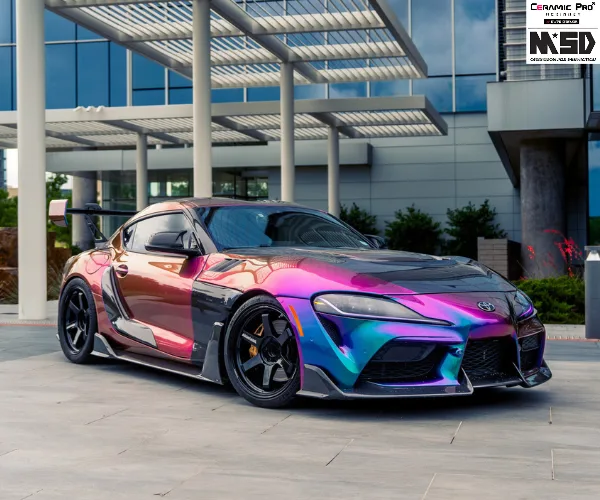
A professionally installed vinyl wrap adds a protective layer over factory paint, helping reduce sunlight, abrasion, and contaminants. It is not armor and cannot prevent every chip, but suitable film and careful installation can help preserve the finish beneath it. For Prosper drivers, that barrier can be useful through bright summers, dusty roads, highway commutes, and outdoor parking.
These conditions make material selection and routine inspection especially worthwhile for local drivers.
How a Wrap Helps Shield Paint
A barrier against sunlight
Ultraviolet radiation gradually affects automotive clear coats, contributing to fading and dullness. Quality opaque wrap films block much of the direct sunlight from reaching covered paint. Protection varies by film type, color, and coverage, so a wrap is not a substitute for sensible vehicle care.
The film takes daily exposure instead of the original finish. Correct removal may reveal better-preserved paint, provided the finish was sound beforehand.
A buffer from road debris
Gravel and stones can strike painted panels. Vinyl wrap provides a sacrificial surface that may limit minor scuffs and surface abrasion. However, standard vinyl is thinner than dedicated paint protection film and may not prevent sharp stones from chipping paint, especially at highway speeds.
Drivers using construction routes or busy regional roads should discuss realistic expectations before choosing a material. For stronger impact resistance on vulnerable panels, paint protection film may be more suitable or may complement a styling wrap.
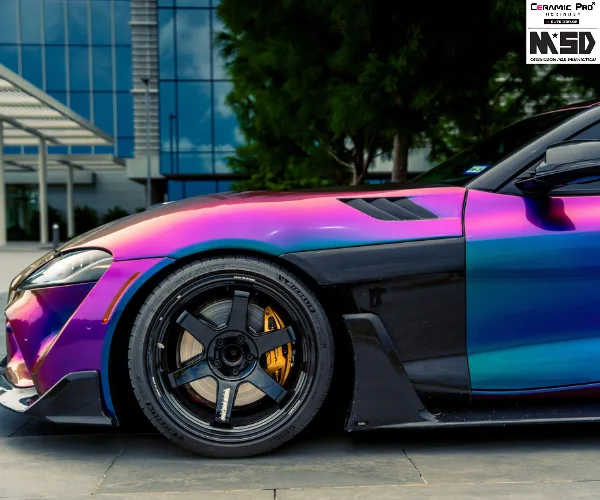
Why Installation Quality Matters
Film performs best when the surface is properly prepared. Dirt, wax, polish residue, or moisture beneath the material can interfere with adhesion and create visible flaws. Installers should inspect and clean the paint before applying film with controlled tension and accurate alignment.
Edges, curves, mirrors, and body lines need particular attention. Poor trimming or excessive stretching can cause lifting, wrinkles, or early failure. Existing paint condition matters too: wrapping over peeling a clear coat or unstable paint can complicate removal.
Caring for a Wrapped Vehicle in North Texas
Sun, heat, dust, and grime affect wrap life. Park in shade when possible. Wash regularly with a wrap-safe, nonabrasive method. Avoid harsh chemicals, stiff brushes, and high-pressure spray aimed at film edges. Remove bird droppings, insects, and tree sap promptly to reduce staining.
Follow care instructions for the specific film. Check edges periodically, especially after washing or highway trips, and have lifting assessed rather than pulling at it yourself.
Ask about film options, coverage, maintenance, and how existing paint may affect the result. For more on durability, read “What Factors Determine How Long Vinyl Wraps Last on Daily-Driven Vehicles.”
A Practical Choice for Paint Preservation
A wrap is one part of a thoughtful care plan, not a guarantee against damage. With suitable material, professional installation, and consistent maintenance, it can refresh a vehicle's appearance while helping shield original paint from everyday exposure.
MSD Auto Finish in Prosper can help drivers assess whether a wrap suits their vehicle and daily use.
Featured

Contact MSD Auto Finish | Ceramic Pro McKinney
Thanks, your message was sent to MSD Auto Finish | Ceramic Pro McKinney.