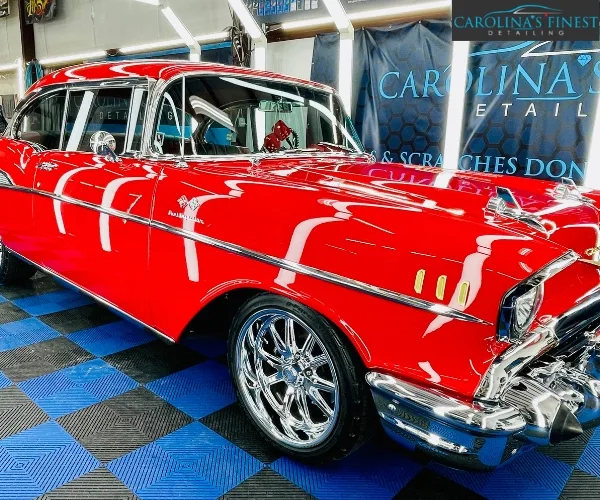
Professional paint correction refines swirl marks, light scratches, oxidation, and other clear coat defects. Preserving that finish takes careful washing, prompt contamination removal, suitable protection, and less contact with dirty surfaces. For Matthews drivers, seasonal pollen, rain, road grit, and daily commuting make consistent care especially useful.
Start With a Gentle Washing Routine
After professional paint correction, maintaining the refined finish requires a gentle washing routine that minimizes friction and prevents new swirl marks. Many wash marks result from grit caught in a mitt dragging across paint and creating fine scratches that gradually dull a corrected finish.
Use automotive shampoo, clean microfiber mitts, and separate wash and rinse buckets. Rinse thoroughly before touching the vehicle. Work from the roof downward, leaving lower panels until last because they collect more road film. Rinse the mitt frequently. Avoid household dish soap, rough sponges, and wheel brushes on painted surfaces.
Dry with a clean, plush microfiber towel. Use light pressure, and replace the towel if it becomes dirty. Never wipe dust from a dry panel; rinse it away first.
Remove Contaminants Promptly
Vehicles around Matthews can collect pollen, tree residue, bird droppings, insect remains, and mineral deposits. Remove these contaminants promptly. Bird droppings and bug residue can stain or etch clear coat in warm weather.
Use Paint-Safe Cleaning Products
Soften stubborn residue with a suitable automotive cleaner and follow its directions. Do not scrape with fingernails, paper towels, or abrasive pads. If bonded contaminants remain after washing, professional decontamination may be appropriate. Clay products can mar paint when used incorrectly, so they are not a substitute for routine washing.
Protect the Finish and Reduce Daily Wear
Wax, paint sealant, or a ceramic coating can make cleaning easier and provide a sacrificial layer against some environmental exposure. None makes paint scratch-proof. Choose protection according to your budget, maintenance routine, and product requirements. Check compatibility with existing coatings before applying anything new.
Parking habits matter. Use covered parking when possible, avoid spaces where doors or bags may contact the vehicle, and keep clear of overhanging branches. On busy roads, leave extra distance behind trucks that may throw gravel. When fueling or loading cargo, avoid leaning objects against painted panels.
Recognize When Professional Care Is Needed
If swirls return, resist polishing repeatedly. Correction removes a small amount of clear coat; unnecessary polishing can reduce the remaining protective layer. A detailer can determine whether the paint needs a careful wash, spot treatment, or further correction.
Carolina's Finest Detailing is an option for Matthews, NC, vehicle owners seeking professional detailing guidance. Visit now to learn about its services and discuss suitable maintenance for your vehicle.
For more background, read “How Does Paint Correction Remove Oxidation, Water Spots, and Clear Coat Imperfections.” Understanding how correction addresses defects explains why gentle aftercare is essential.
A clear finish depends on minimizing friction, removing contaminants promptly, and maintaining appropriate protection. Make these steps part of regular vehicle care, and consult Carolina's Finest Detailing when your paint needs a professional assessment.
Featured


Contact Carolina's Finest Detailing
Thanks, your message was sent to Carolina's Finest Detailing.