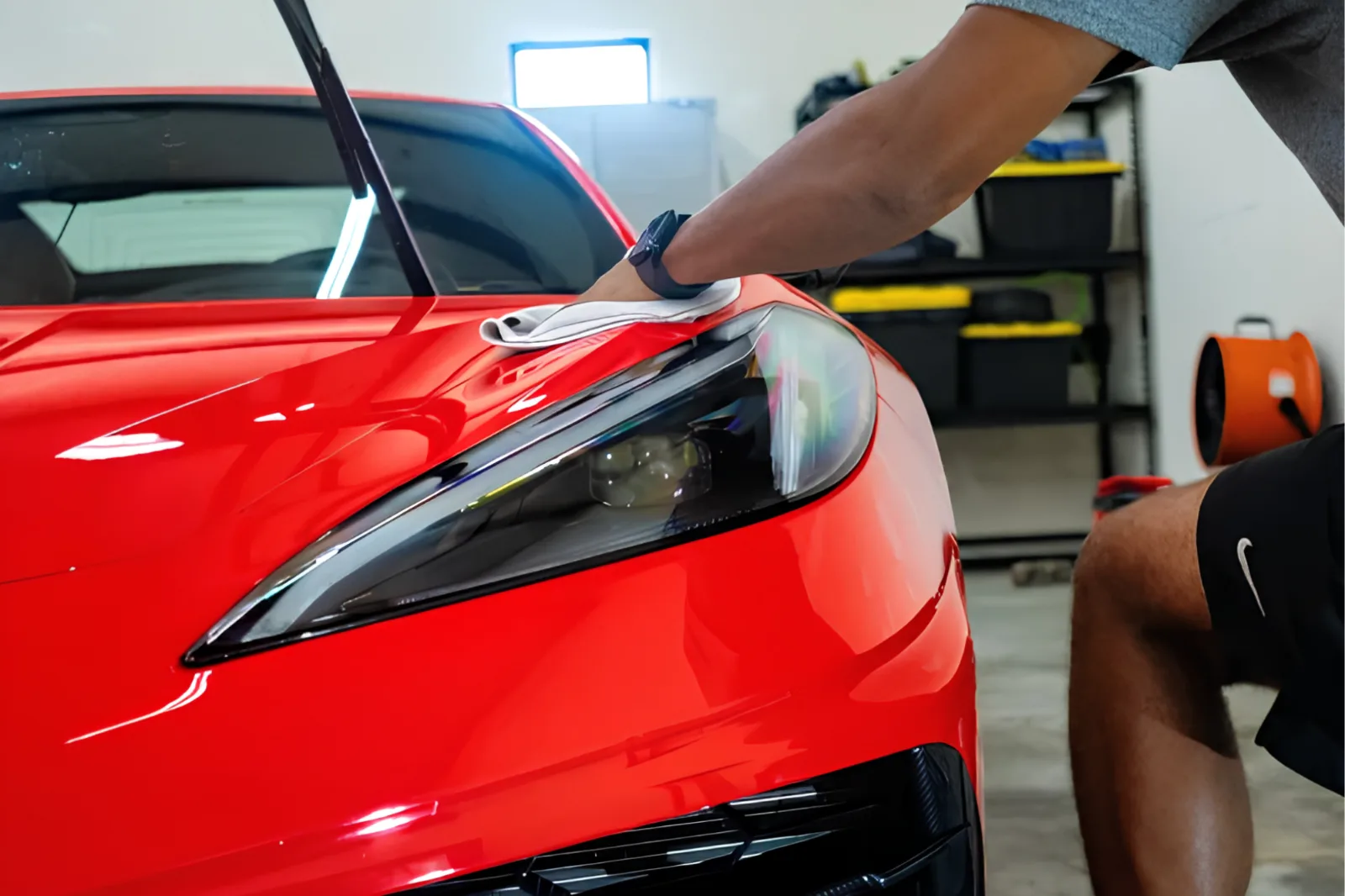
Paint correction reduces certain surface defects that become visible only at specific viewing angles by using controlled polishing to refine the clear coat. Swirl marks, fine scratches, and light oxidation may appear hidden in shade but become obvious under direct sunlight or strong artificial lighting. Understanding why these defects appear helps vehicle owners set realistic expectations before correction begins.
Why Do Paint Defects Appear at Certain Angles?
Light reveals surface irregularities differently depending on its direction and intensity. When sunlight reflects off automotive paint, tiny scratches scatter the light, creating hazy patches, circular swirls, or fine lines.
What Lighting Reveals About Paint Condition
Direct sunlight and inspection lights expose defects that diffuse daylight can hide. Dark-colored vehicles often show swirl marks and polishing haze more clearly because scattered light contrasts with the paint. Curved panels, including doors, fenders, and hoods, also change how reflections appear.
A vehicle may look glossy from one position but reveal imperfections from another. The damage was already present; the viewing angle simply makes it easier to see.
How Does Paint Correction Reduce These Defects?
Paint correction uses suitable polishing compounds, pads, and machine techniques to reduce surface imperfections. The process starts with an inspection under multiple lighting conditions to identify the defects' type, location, and severity.
The goal is not to remove every mark at any cost. Polishing removes a small amount of clear coat, so the method must suit the paint's condition. Deep scratches extending beyond the correctable surface layer may remain visible and require another solution.
Why Does Local Driving Matter in Burlington?
Drivers in Burlington, North Carolina, experience changing light throughout the day, from bright sunshine to shaded parking areas. Road dust, pollen, and everyday grime can also affect reflections. Washing removes loose contamination but does not eliminate scratches already embedded in the clear coat.
Inspecting a properly washed vehicle in both shade and direct light helps distinguish dirt from defects that may require polishing.

Why Does Unevenly Aged Clear Coat Make Paint Correction More Difficult?
Clear coat ages differently across vehicle panels because of varying sunlight, heat, and environmental exposure. One section may develop more oxidation or lose gloss faster than an adjacent panel. Detailers must assess each area individually because the same polishing method may produce different results on surfaces with different conditions. Learn more in What Makes Paint Correction Challenging When Clear Coat Has Aged Unevenly.
A Careful Approach to Paint Correction
James Mobile Detailing helps vehicle owners understand their paint's condition and improve its appearance. A careful inspection identifies defects that may respond to correction and damage that cannot be safely polished away.
The Takeaway
Lighting, surface condition, and panel shape explain why some paint defects appear only at certain angles. Paint correction can reduce many light imperfections, but preserving clear coat remains essential. Explore detailing options at James Mobile Detailing.
Featured

Contact James Mobile Detailing
Thanks, your message was sent to James Mobile Detailing.