
A complete auto detailing service goes beyond a routine car wash. It combines exterior cleaning, paint decontamination, interior vacuuming, and surface-specific care to help maintain a vehicle’s appearance and condition. For drivers in Hopatcong, New Jersey, seasonal weather, road salt, rain, and daily commuting can introduce contaminants that require more attention than a basic wash.
Understanding each step helps vehicle owners choose appropriate services and maintain their cars between appointments.
How Exterior Auto Detailing Works
Exterior auto detailing focuses on cleaning and caring for painted surfaces, glass, wheels, tires, and exterior trim.
1. Pre-Washing and Rinsing
The process typically begins with rinsing away loose dirt. A suitable pre-wash product helps loosen grime before contact washing, reducing the risk of dragging abrasive particles across the paint.
2. Hand Washing and Wheel Cleaning
Detailers wash the vehicle using automotive-safe products and appropriate tools. Wheels and tires receive separate attention because brake dust and road film accumulate around these areas. In northern New Jersey, winter driving can leave salt residue on lower body panels and wheel wells, making seasonal cleaning particularly useful.
3. Paint Decontamination and Inspection
After washing, the paint is inspected for bonded contaminants, including stubborn road residue and industrial fallout. Depending on its condition, a detailer may use a clay treatment or another suitable method to remove contamination that ordinary washing cannot eliminate.
4. Drying, Polishing, and Protection
Surfaces are dried carefully to minimize water spots. Polishing may improve gloss and reduce certain light imperfections. Wax or another appropriate protectant can then be applied, depending on the vehicle’s condition and the selected service.
What Happens During Interior Detailing?
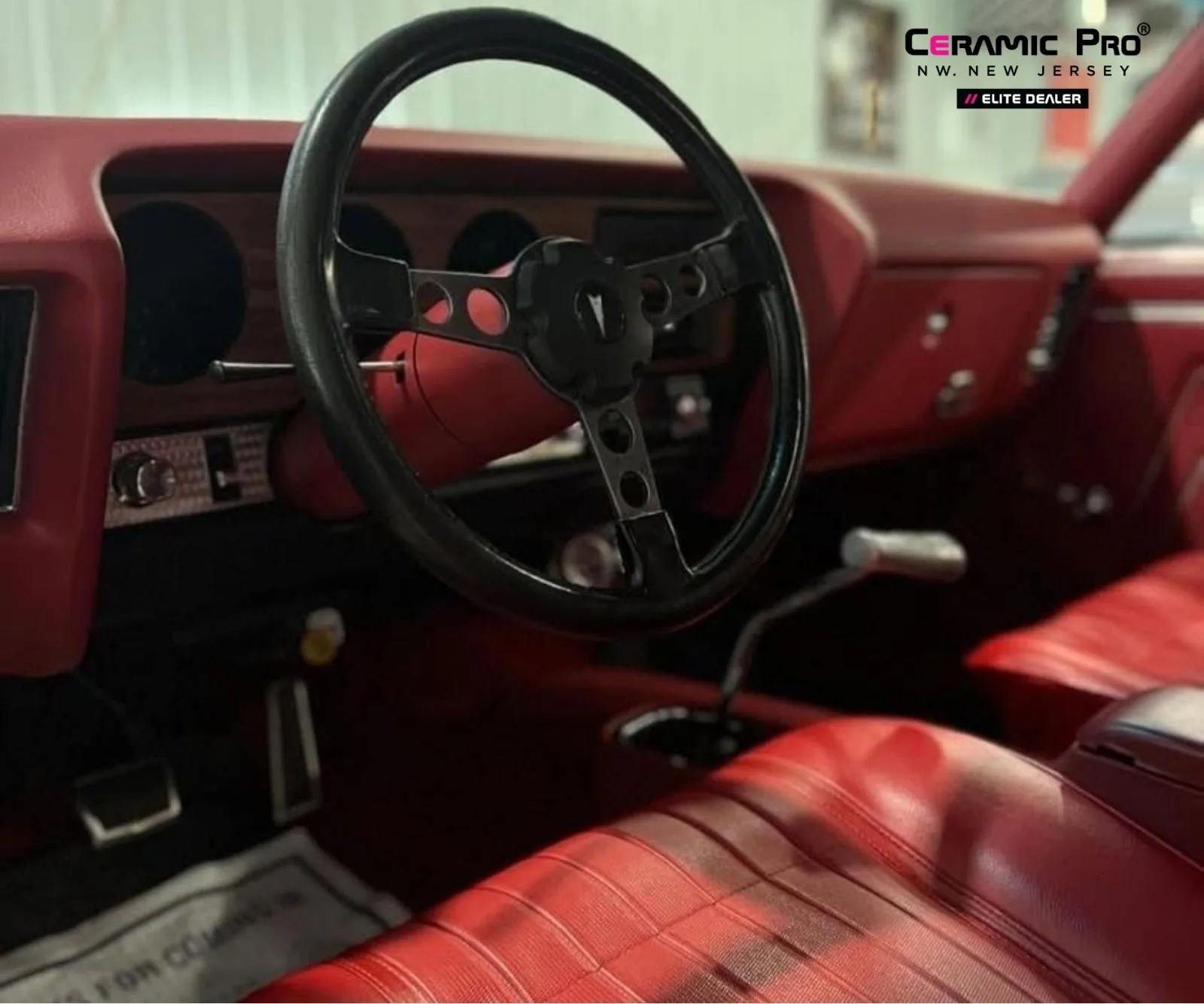
Interior detailing addresses the surfaces drivers and passengers use daily.
5. Vacuuming and Debris Removal
Floor mats, seats, carpets, and accessible crevices are vacuumed. Removing loose dirt first helps prevent grit from spreading during subsequent cleaning.
6. Cleaning Upholstery and Hard Surfaces
Fabric seats may need targeted cleaners or extraction, depending on their condition. Leather requires compatible products, while dashboards, consoles, and door panels should be cleaned according to their material and finish.
7. Glass and Finishing Touches
Interior glass is cleaned for clear visibility. Detailers also address accessible vents, cup holders, and door jambs. Persistent odors may require identifying and treating their underlying source rather than simply masking them.
How Often Should Daily Drivers Receive Professional Detailing?
Frequency depends on mileage, parking conditions, passenger activity, and seasonal exposure. Regular commuters may benefit from professional detailing every few months, while heavily used family vehicles might need interior attention more frequently. The related guide, “How Often Should A Daily-Driven Vehicle Receive Professional Auto Detailing,” explores how driving habits influence maintenance schedules.
Maintaining Your Vehicle in Hopatcong
Ceramic Pro NWNJ can help drivers explore suitable vehicle-care options. Ultimately, thorough detailing combines careful cleaning, material-specific treatment, and appropriate protection. Regular maintenance between professional appointments helps keep vehicles cleaner and more comfortable through New Jersey’s changing seasons.
Featured

Contact Ceramic Pro NW New Jersey (Autocorrect Detailing)
Thanks, your message was sent to Ceramic Pro NW New Jersey (Autocorrect Detailing).