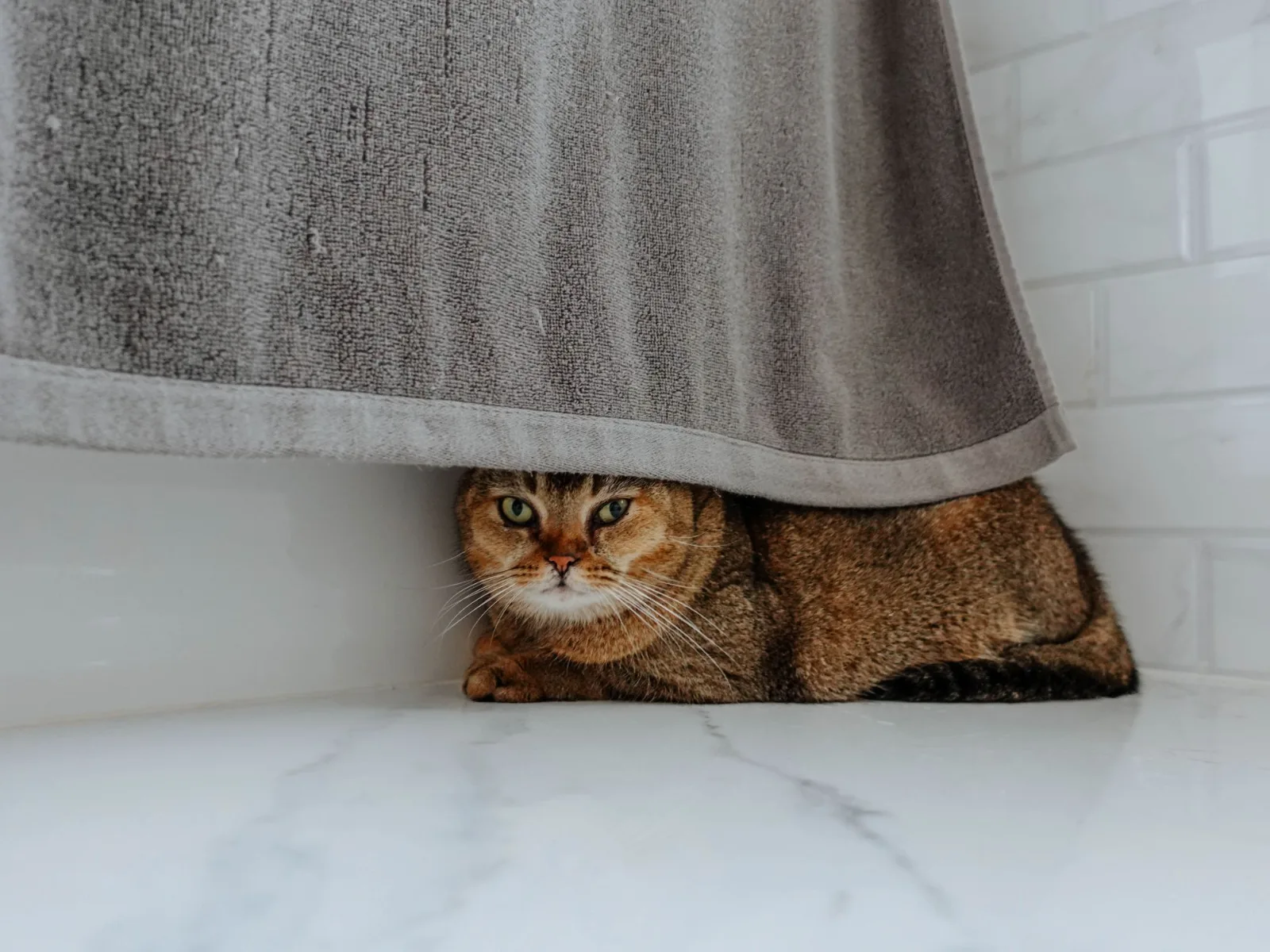
It can be unsettling to bring home a new cat and barely see them for the first few days. Some adopters (especially first-time cat parents) might worry that that something is wrong or assume the cat is unhappy in their new home. In reality, hiding is one of the most common ways cats respond to stress and change.
For many newly adopted cats, disappearing under a bed or behind furniture gives themselves time to assess a home that looks, smells, and sounds completely different from what they knew before.
The length of this adjustment period can vary per cat. Here are a few things to expect during this time and ways to help your new cat feel more comfortable.

Hiding Is a Normal Stress Response
Cats are very sensitive to changes in their environment. Moving into a new home brings a lot of changes all at once.
A new home has unfamiliar people, new smells and sounds, different routines, and an entirely new space to understand. Even if the home is calm and welcoming, it's still unfamiliar territory.
A hiding place gives a nervous cat somewhere that feels protected while they figure things out. Retreating doesn’t mean they dislike you or that the adoption is going badly. They’re learning whether this new environment is safe, and staying out of sight for a while can be part of that process.
Give Your Cat Time to Take Everything In
Adoption is exciting for the people bringing a cat home, but the experience can look very different from the cat’s perspective. They’ve left one environment and arrived somewhere they don’t yet understand, surrounded by people who are eager to meet them.
Some cats are ready to explore almost immediately, while others prefer to watch from a safe distance for several days or longer. You might hear them moving around after the house gets quiet or notice that they’ve eaten while no one was nearby.
It can be tempting to measure progress by how quickly your cat wants to interact with you, but simply becoming comfortable enough to eat, use the litter box, explore, and spend more time outside a hiding place can tell you quite a bit in the early days.
Resist the Urge to Force Interaction
When you’re excited to bond with a new cat, leaving them under the bed can feel counterintuitive. Reaching in, pulling them out, or repeatedly trying to coax them into interaction can add pressure when what they need most is a sense of control.
Instead, give your cat opportunities to approach you. Spend some quiet time nearby, speak softly, and let them become familiar with your presence without expecting interaction.
Food, treats, toys, and gentle play can eventually build positive associations with you, but your cat gets to decide when they’re ready to participate. Trust tends to develop more easily when they learn that coming out of hiding won’t lead to being grabbed or overwhelmed.
Start With a Smaller, Quieter Space
Giving a new cat immediate access to an entire home can be a lot to process. Many cats are more comfortable starting in one quiet room and gradually expanding their territory as they become more confident.
Set up the room with food, fresh water, a litter box, comfortable bedding, and an appropriate place to hide. Keep food and water separate from the litter box, and make sure your cat has somewhere they can retreat without becoming impossible to reach in an emergency.
Once your cat is eating reliably, using the litter box, exploring the room, and showing more curiosity about what’s beyond the door, you can give them more access at a pace that works for them.
Signs a Cat Is Starting to Adjust
A cat settling into a new home doesn’t necessarily go from hiding all day to sleeping in your lap overnight. The changes are usually much smaller than that.
You might notice them peeking out when you enter the room, staying visible for a little longer, eating while you’re nearby, grooming comfortably, playing with a toy, or exploring when the house is calm. Eventually, curiosity will start winning out over caution.
These behaviors are small, but count them as wins. A cat who feels safe enough to investigate their surroundings is already making progress, even if affection comes much later.
When Should Hiding Be a Concern?
Hiding by itself can be part of a normal adjustment period, but pay attention if it's paired with concerning behaviors.
A cat who won’t eat or drink, isn’t using the litter box, is vomiting repeatedly, has diarrhea, seems unusually weak, has difficulty breathing, or shows other signs of illness needs medical attention.
Cats are also known for concealing pain and illness, so a major change in behavior deserves your attention even after they’ve settled into the home. If you’re concerned about your cat’s eating, drinking, bathroom habits, energy level, or overall health, contact a veterinarian.

Frequently Asked Questions About a New Cat Hiding
How long will a newly adopted cat hide?
There isn’t one adjustment timeline. Some cats start exploring within hours, while others need several days or longer. Personality, previous experiences, the home environment, and the presence of other pets can all influence how quickly a cat becomes comfortable.
Should I block my new cat from hiding under the bed?
You don’t have to eliminate hiding places altogether. Cats benefit from having somewhere safe to retreat. Providing accessible options like a covered cat bed, box, or carrier can give them privacy while making it easier for you to monitor them (but they may still choose to hide in that cozy spot behind the couch).
Should I leave food near my cat’s hiding place?
Keeping food and water somewhere your cat can comfortably reach can help during the adjustment period. Avoid placing either directly beside the litter box. As your cat gains confidence, you can gradually establish the feeding spot you plan to use long term.
Is it normal for a new cat to come out only at night?
It can be. A nervous cat might feel more comfortable exploring when the house is quiet and people are asleep. As they become more familiar with the household and its routines, they may start appearing more during the day.
How can I help my new cat trust me?
Give them space, keep interactions calm, maintain a predictable routine, and allow them to initiate contact when possible. Quiet time together, treats, play, and gentle interaction can gradually help your cat associate you with safety and positive experiences.
Let Your Cat Set the Pace
A cat who hides after adoption isn’t necessarily rejecting their new home or the people in it. They’re getting acquainted with an unfamiliar place that became their entire world almost overnight.
Give them somewhere safe to retreat, keep the environment relatively calm, and watch for small signs that their confidence is growing. Eventually, the cat you barely see during the first few days might become the cat that follows you from room to room.
For now, giving them the freedom to get there on their own terms can be one of the best ways to start building trust.
This community resource is made possible through the generous support of local WhirLocal sponsors.