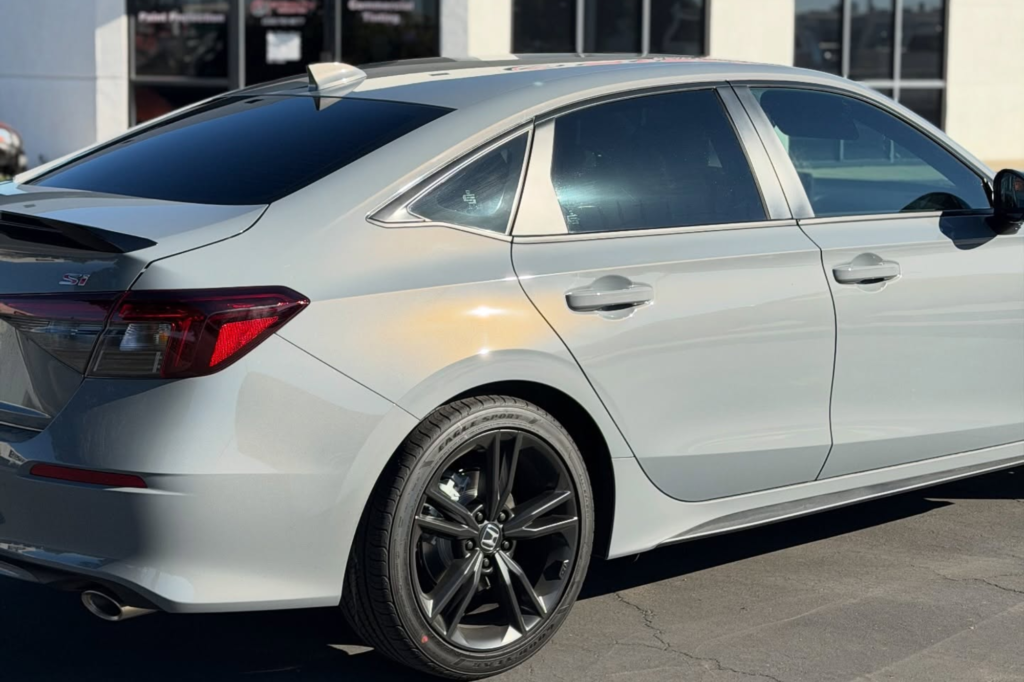
Window tinting can help manage heat around curved automotive glass by filtering solar energy across the glass surface while maintaining consistent film coverage. Curved windows can be more challenging than flat glass because their shape changes how sunlight reaches the surface and how film must conform during installation.
For drivers in Chico, CA, strong sunlight and extended periods of vehicle exposure can make heat management particularly noticeable. Side windows, rear glass, and other curved surfaces may become hot quickly when a vehicle sits outdoors.
Why Does Curved Glass Experience Uneven Heat?
Automotive glass does not always receive sunlight at the same angle. Curved sections can interact with changing sunlight throughout the day, creating areas that feel warmer depending on the vehicle’s position and the sun’s direction.
The amount of heat entering the cabin also depends on the glass itself, the window’s orientation, and the window tinting film’s solar performance. A darker appearance does not automatically mean greater heat rejection.
Film Coverage Matters
On curved glass, proper film coverage is important because gaps, uneven edges, or installation imperfections can affect appearance and performance. The film must be carefully shaped to follow the glass without unnecessary creasing or distortion.
How Does Window Tinting Manage Solar Heat?
Quality window film can reduce the amount of solar energy transmitted through automotive glass. Depending on the film technology, it may also reduce infrared energy and ultraviolet transmission while maintaining a particular level of visible light transmission.
This creates an important balance. Drivers need enough visibility for nighttime driving and changing road conditions while also wanting relief from intense sunlight during daytime travel.
Chico’s hot, sunny conditions can make this balance especially relevant. Vehicles parked outside can develop significant cabin heat, while direct sunlight through side or rear glass can make certain seating areas noticeably warmer than others.
How Does Repeated Sun Exposure Affect Window Tinting?
Curved glass can receive concentrated sunlight and heat, making repeated exposure an important factor in window film performance. Read How Does Window Tinting Respond to Repeated Exposure to Intense Sun and Heat to learn more.
What Should Drivers Consider With Curved Windows?
Before choosing window tinting, consider the shape of the glass, desired darkness, visibility needs, and the film’s heat-rejection characteristics. Installation quality also matters because curved surfaces require careful preparation and controlled application.
Stealth Window Tint and Paint Protection works with vehicle owners in Chico who want to address heat, glare, and sunlight through professionally installed window film. Evaluating the vehicle’s glass and intended use can help determine an appropriate tint option.
The Takeaway
Curved automotive glass can concentrate sunlight and create uneven heat exposure inside a vehicle. Properly selected and installed window tinting can help manage solar heat while maintaining practical visibility.
For Chico drivers dealing with intense cabin heat, Stealth Window Tint and Paint Protection can help evaluate the vehicle’s glass and discuss window film options suited to its shape and daily use.