Pet turf is designed to handle active dogs, frequent foot traffic, and regular outdoor use, but proper installation is essential for keeping the surface smooth. A stable sub-base, adequate compaction, secure perimeter anchoring, properly joined seams, and appropriate infill all help prevent artificial grass from shifting, rippling, or developing wrinkles over time.
What Causes Pet Turf To Shift Or Wrinkle
Artificial grass typically doesn’t move just because pets run across it. Problems are more often associated with installation or underlying surface conditions.
Common Causes Of Turf Movement
Several factors can contribute to wrinkles or shifting:
- Poorly compacted sub-base: Loose aggregate beneath the turf can settle unevenly after installation.
- Insufficient anchoring: Turf edges need to be secured so repeated activity does not gradually pull the material out of position.
- Improper seams: Weakly connected sections can separate or develop visible ridges.
- Inadequate infill: Properly distributed infill helps support the turf fibers and stabilize the surface.
- Drainage problems: Standing water can move the underlying materials and affect surface stability.
Heavy pet use can expose these weaknesses more quickly, particularly in areas where dogs repeatedly run, turn, dig, or play.
How Can You Keep Pet Turf Smooth Under Heavy Use
The installation begins with the ground beneath the turf. The existing surface should be properly prepared, with an appropriate aggregate base installed and compacted to create a firm foundation. Also consider drainage so water doesn’t accumulate beneath the artificial grass.
For homeowners considering a conversion from a natural lawn, the question Can Pet Turf Be Installed Over Existing Grass is worth addressing before installation. Existing grass generally needs to be removed and the underlying area properly prepared rather than simply placing artificial turf over an unstable or uneven lawn. A suitable foundation helps minimize settling and movement later.
During installation, position the turf carefully to avoid unnecessary folds or tension. Secure perimeters and seams properly, and distribute infill evenly across the surface.
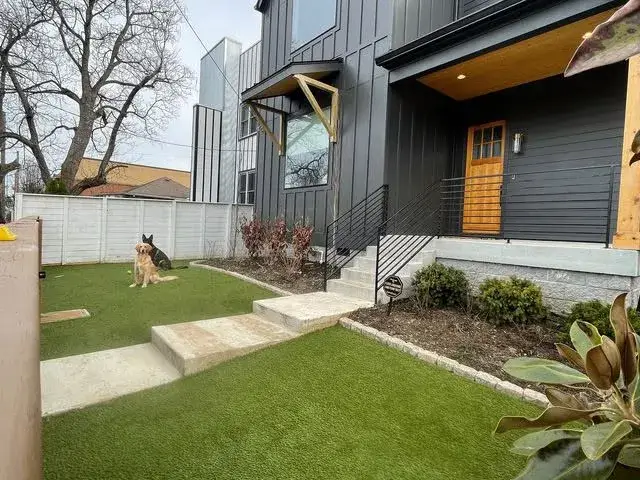
What Maintenance Helps Prevent Wrinkles
Regular pet turf inspections can identify small problems before they become more noticeable. Check high-traffic areas for loose edges, raised sections, separated seams, or surface depressions. Remove debris regularly and maintain appropriate infill levels for the turf system to keep the surface stable and resilient under repeated pet activity.
In Elmhurst, winter conditions make pet turf installation quality especially relevant. Freeze-thaw cycles can affect poorly prepared ground, so a properly constructed base is key to maintaining long-term surface stability.
What Should Homeowners Look For In A Pet Turf Installation
Ask about sub-base preparation, drainage, seam construction, perimeter securing, and the infill system being used. These details often matter more to surface stability than simply choosing a particular turf appearance.
Beacon Turf provides an option for homeowners considering artificial turf for pet-friendly outdoor spaces in the Elmhurst area.
The Takeaway
Preventing pet turf from shifting or wrinkling starts beneath the grass itself. Proper ground preparation, compaction, drainage, anchoring, seam installation, and routine maintenance work together to create a stable surface that can handle active pets and regular use.
