Paint correction is important because it improves automotive paint by reducing swirl marks, fine scratches, oxidation, water spots, and haze. Controlled polishing refines the clear coat and restores a smoother, clearer appearance while preserving the paint’s integrity. For College Park, GA drivers, this can help address imperfections caused by sunlight, pollen, road dust, contaminants, and improper washing.
What Paint Defects Can Paint Correction Address
Everyday driving and washing can leave automotive paint looking dull or less reflective. Improper washing techniques, automatic car washes, contaminated wash materials, and general wear may contribute to swirl marks and other defects.
Paint correction uses machine polishing to refine the clear coat around suitable imperfections. As the surface becomes more uniform, it can reflect light more evenly, improving clarity, gloss, and color depth.
However, not every defect can or should be completely removed. Deeper scratches may extend too far into the paint system for safe polishing. A professional assessment helps determine which imperfections can realistically be improved.
How Does The Condition Of The Paint Determine The Process
Every vehicle requires a correction approach based on its paint condition. A newer vehicle with light swirling may need only a finishing polish, while heavily neglected paint may require multiple polishing stages.
Preparation is also important before polishing begins. Vehicle owners who want to understand this step can explore How Do You Prepare A Vehicle For Professional Paint Correction.
The goal is meaningful improvement without unnecessarily removing clear coat.
Why Does Paint Correction Require Careful Technique
Clear coat thickness is limited, so correction needs to balance defect removal with paint preservation. More aggressive polishing may address imperfections more effectively, but it can also remove more clear coat.
A test spot can help determine which polishing pad, compound, machine, and technique produces the desired improvement. Paint hardness, previous repairs, color, and overall condition can influence how the surface responds.
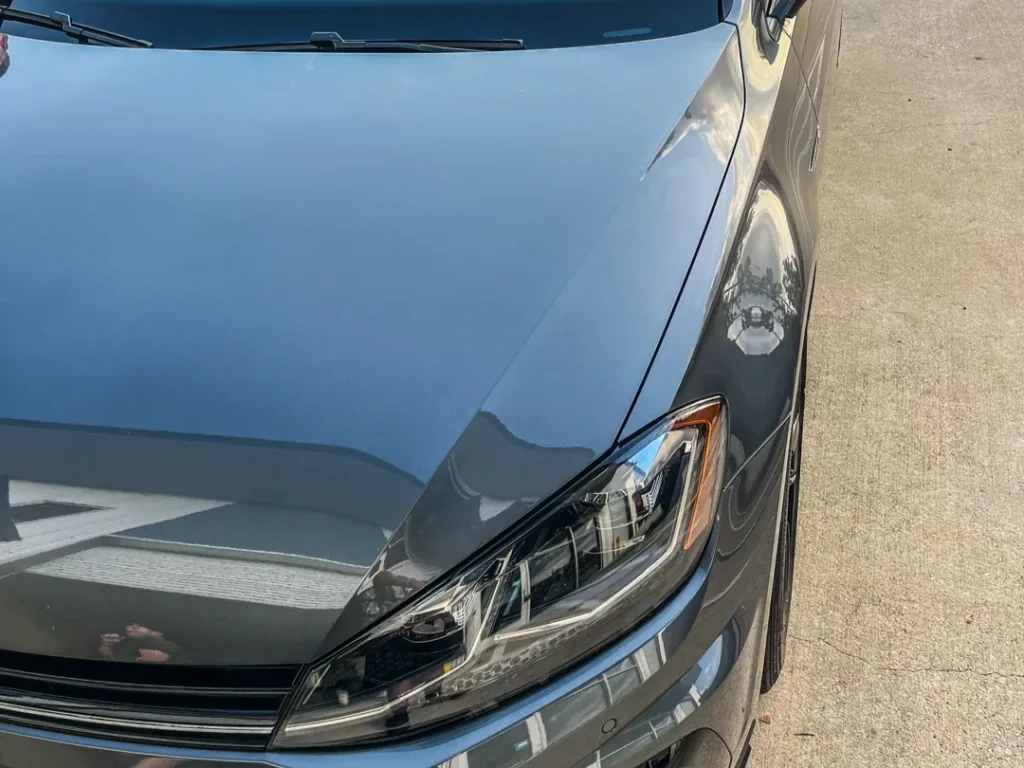
What Other Paint Issues Can Be Improved
Depending on the severity of the condition, polishing may improve the appearance of:
- Fine scratches
- Oxidation
- Water-spot etching
- Paint haze
- Light marring
- Surface dullness
- Wash-induced defects
The depth of each imperfection determines whether polishing can safely improve it. Some defects may remain because removing them completely could compromise the clear coat.
How Can Drivers Maintain Corrected Paint
After correction, proper maintenance can help preserve the improved appearance. Using clean wash media, microfiber towels, safe washing techniques, and careful drying methods can reduce the chance of introducing new marring.
This matters for College Park vehicles regularly exposed to sunlight, road grime, pollen, and outdoor parking.
The Takeaway
Paint correction at Pavilion Auto Studio can improve automotive paint by reducing surface imperfections and restoring greater clarity and gloss. Because every vehicle has different paint conditions, the process should be tailored to the surface’s specific needs. Careful evaluation and proper technique can make the difference between simply cleaning the paint and genuinely refining its appearance