Drive through Indian Land after a sudden Carolina downpour, and you might notice something mesmerizing on certain cars: water rolling off the paint in tight, perfect little spheres rather than sitting in messy, flat puddles. It almost looks like magic, but there is brilliant chemistry and physics at play. For local drivers navigating everything from dusty red clay roads to sticky pine pollen season, understanding why ceramic coating causes this distinct water-beading behavior reveals a lot about how modern vehicle protection actually works.
The Science of Surface Tension and Hydrophobicity
To understand water beading, we have to look at what happens at a microscopic level. Factory clear coat, while smooth to the naked eye, is actually full of microscopic peaks and valleys. When water lands on an untreated vehicle, it fills these tiny imperfections, spreading out into a flat sheet that clings to the paint.
A professional-grade ceramic coating changes the game entirely. Formulated with advanced nanotechnology typically using silica dioxide, the liquid polymer cures into an ultra-thin, glass-like quartz layer that fills those microscopic pores. This creates an exceptionally flat, uniform surface with high surface energy properties known as extreme hydrophobicity (water-fearing). Because the water molecules cannot grip the slick, sealed surface, internal cohesive forces pull the liquid inward upon itself, forcing it to form high-contact-angle droplets, or “beads.”
Protecting Beyond Rain: What Else Does It Shield Against?
While magnificent water beading is the most visible perk, the benefits of this protective layer extend far beyond repelling rainstorms. As detailed in the companion guide What Does Ceramic Coating Protect a Vehicle From Besides Scratches, this nano-barrier acts as a robust shield against environmental fallout.
In our region, vehicles face harsh summer UV rays that oxidize clear coats, stubborn tree sap, acidic bird droppings, and thick layers of seasonal pollen. Because the ceramic layer is chemically inert and tightly cross-linked, these contaminants sit on top of the coating rather than etching directly into your vehicle’s factory paint. Maintenance becomes remarkably simple, as contaminants wash away easily during routine cleaning.
Local Driving Realities in Indian Land, SC
Indian Land roads and weather patterns present unique daily challenges for vehicle finishes. Between humid summer heat, morning dew, and highway grime kicked up along busy local corridors, untreated paint collects stubborn buildup quickly.
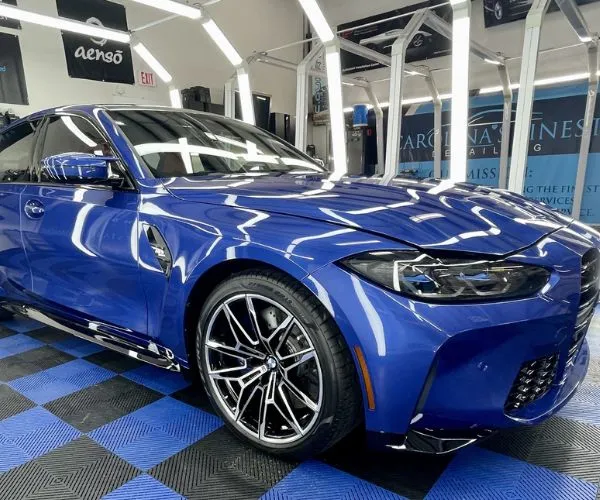
When a vehicle is treated with a ceramic application by Carolina’s Finest Detailing, that dynamic shifts. The tight water beads act as miniature sweepers. As you drive down the road at moderate speeds, airflow pushes the spherical droplets across the hood and roof, lifting loose dirt and dust particles away with them. This self-cleaning effect helps keep vehicles looking freshly washed even between regular maintenance routines.
Summary and Next Steps
The iconic water beading of ceramic coatings isn’t just satisfying; it proves superior protection and reduced friction. By smoothing micro-imperfections, it creates a hydrophobic barrier that keeps cars cleaner through unpredictable weather. For long-term paint preservation against the elements, explore professional options at Carolina’s Finest Detailing.
Featured Place
Carolina’s Finest Detailing, Ceramic Coatings, and Paint Protection Film (PPF)
1407 N Rocky River Rd
Monroe, North Carolina 28110
(337) 319-2889