Some people have more moles than others, and many people have moles that have looked the same for years. Still, it’s a good idea to pay attention when an existing mole changes or when a new spot looks different from the others.
A dermatologist can examine the area thoroughly and determine whether your moles look normal, need monitoring, or should be tested further. When it comes to skin changes, getting a clear answer is better than guessing.
Know What Is Normal for Your Skin
Everyone’s skin is a little different. Some people have a lot of moles, freckles, or sun spots, while others have only a few. The important thing is to become familiar with what is your “normal.”
A quick skin check at home can help you notice changes. Take a close look at areas that get sun exposure, like your face, neck, arms, shoulders, back, and legs, but don’t forget places that are easier to miss. Moles and other skin changes can appear on the scalp, bottoms of the feet, between toes, under nails, behind your knees, or in areas that rarely see the sun. Watch for anything new, changing, or unusual on both sun-exposed and sun-protected areas of the body.
Changes Deserve Attention
A mole should be checked by a dermatologist if it starts to grow, change color, develop an uneven shape, itch, bleed, crust, or feel painful. A new spot that looks different from your other spots is also important to mention to a dermatologist.
Dermatologists may talk about the “ugly duckling” sign. This means one mole or spot looks noticeably different from the rest. It might be darker, larger, oddly shaped, or simply unlike the surrounding spots. That difference alone can be a reason to schedule an exam.
You should also pay close attention to spots that don’t heal. A sore, bump, or scaly patch that keeps returning or bleeding should be examined by a medical professional.
Use the ABCDE Method as a Guide
The ABCDE method is a simple way to remember common melanoma warning signs. It doesn’t diagnose skin cancer, but it can help you decide if one of your moles needs needs a closer look.
ABCDE stands for:
- Asymmetry: One half of the mole does not match the other
- Border: The edges are uneven, jagged, blurred, or poorly defined
- Color: The spot has more than one color or has changed color
- Diameter: The spot is larger than a pencil eraser, though smaller spots can still be concerning
- Evolving changes: The mole changes in size, shape, color, height, or symptoms
The last one matters a lot. A mole that changes over time deserves attention, even if it doesn’t check every other box.
Risk Factors
Some people have a higher risk of skin cancer and may need more regular skin checks. Risk can be affected by a history of sunburns, tanning bed use, fair skin, many moles, atypical moles, a personal history of skin cancer, or a family history of melanoma.
Not only high-risk people should pay attention to moles. Skin cancer can happen in many skin types and on many areas of the body. But if you know you have risk factors, it’s wise to ask a dermatologist how often you should have a full skin check.
What Happens During a Skin Check
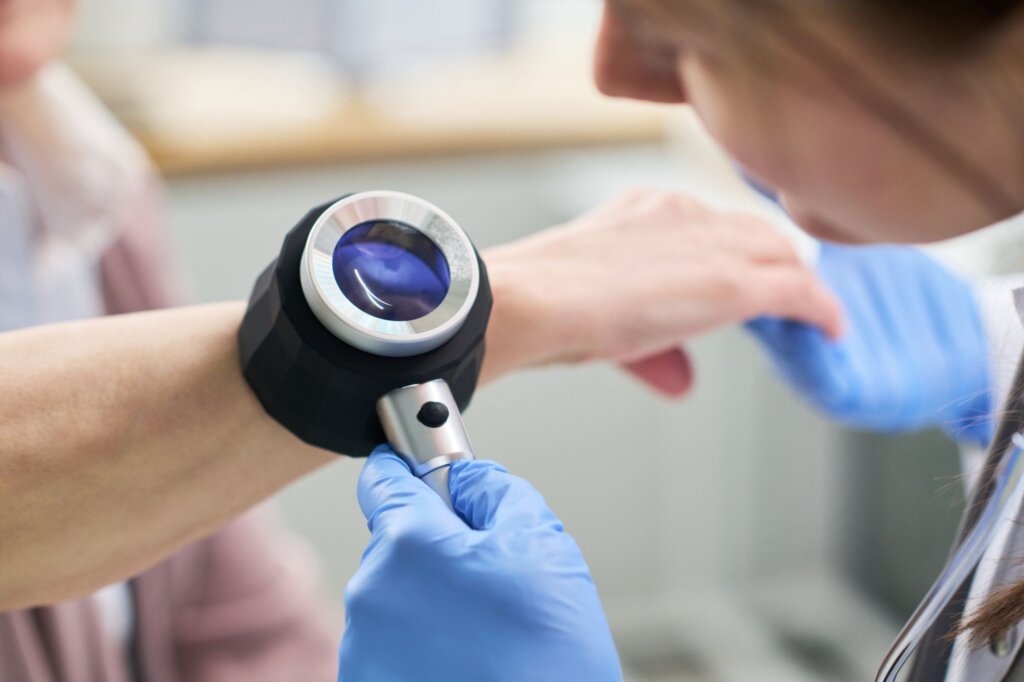
A skin check appointment is usually straightforward. The dermatologist will examine your skin and look more closely at any spots that seem unusual. They may use a small handheld tool called a dermatoscope to see details that are harder to notice with the naked eye.
If a mole or spot looks concerning, the dermatologist may recommend a biopsy. That means removing a small sample, or sometimes the whole spot, so it can be examined in a lab. Not every mole that gets biopsied is cancerous, but testing is the best way to know.
You can also bring up spots that worry you, even if they seem small. It helps to mention when you first noticed the mole, whether it has changed, and whether it itches, bleeds, hurts, or crusts.
Everyday Habits That Help Protect Your Skin
Skin checks are important, but daily protection is your first line of defense. Sunscreen, shade, hats, sunglasses, and protective clothing can all help reduce UV exposure. Avoid tanning beds, which expose skin to UV radiation.
If you spend a lot of time outdoors for work, sports, gardening, or family activities, build sun protection into your routine. Keeping sunscreen near the door, in the car, or in a bag can help you create a habit of applying when you go outside.
A Skin Check Can Give You Clearer Answers
A changing mole does not always mean something serious, but it’s worth checking instead of wondering. Dermatologists are trained to spot those tiny details that are easy to miss at home. If a mole looks different, keeps changing, or simply makes you uneasy, schedule a skin check. Early evaluation can bring peace of mind and help catch any concerns when they are easier to treat.
This community resource is made possible through the generous support of local WhirLocal sponsors. This article is meant for informational purposes and is not professional medical advice.