If you’ve ever heard the word “astigmatism” during an eye exam, it can raise questions. What does it actually mean? And how does it affect your day-to-day vision? Despite the clinical name, astigmatism is a common and very manageable vision condition that eye care providers see every day.
A little clarity goes a long way when it comes to eye health. Here’s a straightforward look at what astigmatism is, how it affects vision, and what can be done to correct it.
What Is Astigmatism?
Astigmatism occurs when the cornea—the clear, front surface of the eye—or the eye’s internal lens has an uneven curve. Instead of being evenly rounded, the surface is slightly elongated, which causes light to focus at more than one point inside the eye. The result is vision that may appear blurry, stretched, or unfocused at both near and far distances.
Astigmatism is typically present from birth and frequently appears alongside nearsightedness (myopia) or farsightedness (hyperopia). It can also be caused by eye injuries or surgery. It isn’t caused by screen use, reading habits, or eye strain, and it isn’t something that develops because of daily activities.
Common Symptoms
Symptoms vary depending on the degree of astigmatism. Some people notice changes right away, while others adapt without realizing it. Common signs include:
- Blurred or distorted vision
- Eye strain or visual fatigue
- Headaches, especially after focused tasks
- Trouble seeing clearly at night
- Frequent squinting
Because these symptoms can overlap with other vision issues, a comprehensive eye exam is the best way to identify the cause.
How Astigmatism Is Diagnosed
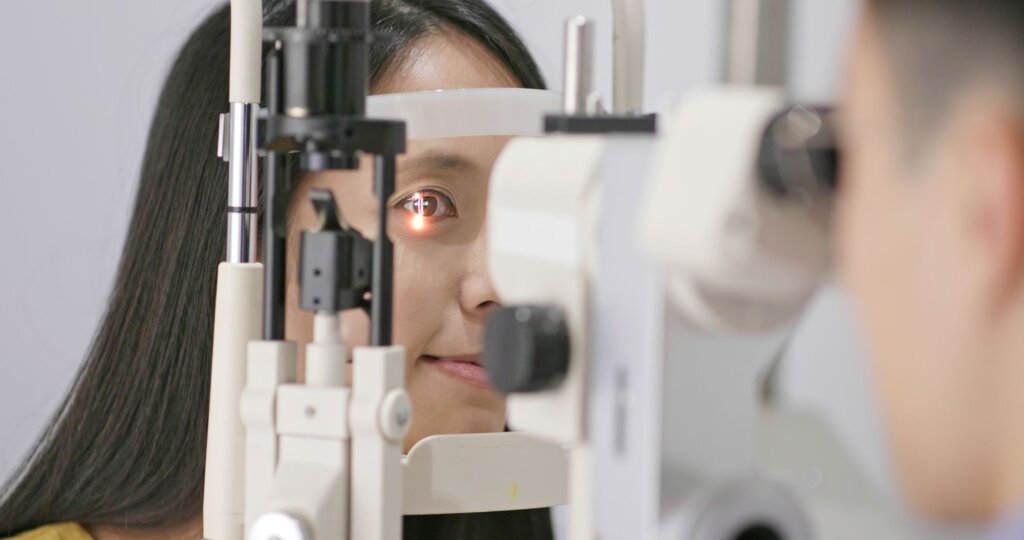
Astigmatism is identified during a routine eye exam using instruments that measure how light travels through the eye and where it comes into focus. The testing process is quick, noninvasive, and part of standard vision care.
The American Optometric Association notes that regular eye exams help track changes in vision over time and reduce unnecessary eye strain, especially for people who read, drive frequently, or spend long hours on screens.
Treatment Options
Astigmatism is highly correctable through corrective lenses or surgery.
- Eyeglasses: Specially designed lenses help redirect light so it focuses properly on the retina.
- Contact lenses: Toric contact lenses are shaped to correct astigmatism and provide stable, clear vision.
- Refractive surgery: Procedures such as LASIK can correct astigmatism for some adults, depending on eye health and prescription stability.
An eye care provider can help determine which option aligns best with your vision needs, comfort, and daily routines.
Does Astigmatism Change Over Time?
Astigmatism can shift gradually as the eyes develop or age. These changes are typically mild and easily addressed with updated prescriptions. Routine eye exams make it easier to catch those adjustments and keep vision comfortable during work, driving, and everyday activities.
Understanding Leads to Better Vision Care
With proper correction, most people with astigmatism see clearly and comfortably. Stay informed and keep up with regular eye exams to guarantee that your vision needs are met as they change.
This article is meant for informational purposes only and does not contain professional medical advice. If you have further questions, make an appointment with a trusted eye care provider in your area.