Buying light bulbs used to feel simple. You picked a wattage, checked the shape, and headed home. Now the shelves are full of LEDs, smart bulbs, dimmable bulbs, vintage-style bulbs, daylight bulbs, soft white bulbs, and numbers that don’t always make sense at first glance.
The upside is that we have better lighting options than ever. The right bulb can make a kitchen easier to work in, a living room feel warmer, a bathroom mirror more useful, or a porch safer at night. Once you know what the main labels mean, choosing bulbs becomes much easier.
Start With Lumens, Not Watts
For years, many people chose bulbs by wattage (shown as “W” on packaging). A 60-watt bulb meant one level of brightness, while a 100-watt bulb meant another. With LED lighting, watts mostly refer to energy use, whereas brightness is measured by lumens.
The U.S. Department of Energy recommends thinking in lumens rather than watts when buying light bulbs. More lumens means a brighter bulb, and fewer lumens means a dimmer bulb. LED bulbs provide a comparable lumen output as older incandescent bulbs while using a fraction of the power. Because of this, light bulb packages will often refer to a wattage replacement, such as 800 lumens for a 60-watt replacement bulb and around 1,100 lumens for a 75-watt replacement bulb.
Always check the package, because brightness and energy use can vary by product.
Know the Main Types of Bulbs
As mentioned, LED bulbs are now the most common choice for many homes. They are more energy-efficient than older incandescent bulbs, last longer, stay cool to the touch, and come in many shapes, brightness levels, and color temperatures.
Incandescent bulbs are the older style of filament bulbs. They give off warm light, but they use more energy, can get warm to the touch, and do not last as long as LEDs.
Halogen bulbs are a type of incandescent lighting. They tend to be bright and crisp, but they can get hot and are less efficient than LEDs.
CFL bulbs, or compact fluorescent bulbs, use less energy than traditional incandescent bulbs, but they take time to warm up, and may not work well in every fixture. They also contain a small amount of mercury, so they need proper disposal.
Smart bulbs are usually LEDs with added controls. Depending on the model, they allow you to change brightness, color temperature, schedules, or colors through an app or voice assistant.
For most everyday home use, LEDs are a practical starting point.

Understand Color Temperature
Color temperature describes how warm or cool the light looks. It is measured in Kelvin, shown as “K” on bulb packaging.
Lower Kelvin numbers are warmer and look more yellow or orange. Higher Kelvin numbers are cooler and look more blue. Warm white bulbs are usually around 2200K to 3000K, neutral or soft white bulbs typically fall around 3500K to 4100K, and daylight or cool white bulbs are often around 5000K to 6500K.
Here’s a closer look at how those temperatures can feel in a home:
2700K to 3000K: Warm and Cozy
This range is often labeled as “warm white.” It gives off a comfortable, slightly yellow light that works well in living rooms, bedrooms, dining rooms, hallways, and lamps. They even make amber bulbs that are meant to mimic the feeling of candlelight.
Warm light is a good choice when you want a room to feel relaxed and welcoming. It is also a safe pick for older homes, traditional spaces, and rooms with warm wood tones or soft paint colors.
3500K to 4100K: Clean and Balanced
This range is often labeled “neutral white” or “soft white.” It feels brighter and cleaner than warm bulbs without looking as blue as daylight bulbs.
Neutral light can work well in kitchens, bathrooms, laundry rooms, garages, closets, and home offices. These bulbs are great for overhead light fixtures since they provide enough clarity for tasks without making the room feel too harsh.
5000K to 6500K: Bright Daylight
Daylight bulbs have a cooler, bluer appearance. They can be helpful in areas where visibility and/or color tone are important, like workshops, utility rooms, garages, craft rooms, reading areas, or task lighting.
Some homeowners also like daylight bulbs in bathrooms or kitchens. Others find them too bright or clinical for everyday living spaces. It often comes down to personal preference and the colors already in the room.
Match the Bulb to the Room
Different rooms need different lighting.
Living rooms and bedrooms often feel best with warm white bulbs, especially in lamps and overhead fixtures used in the evening. Kitchens usually benefit from brighter bulbs with a neutral tone, especially over counters and prep areas. Bathrooms often need clear, balanced light near mirrors so grooming tasks like shaving or putting on makeup are easier.
Laundry rooms, closets, basements, and garages typically need brighter light because these areas are used for practical tasks. Outdoor fixtures sometimes need weather-rated bulbs, dusk-to-dawn features, motion sensors, or brighter output for safety.
Check the Bulb Shape and Base
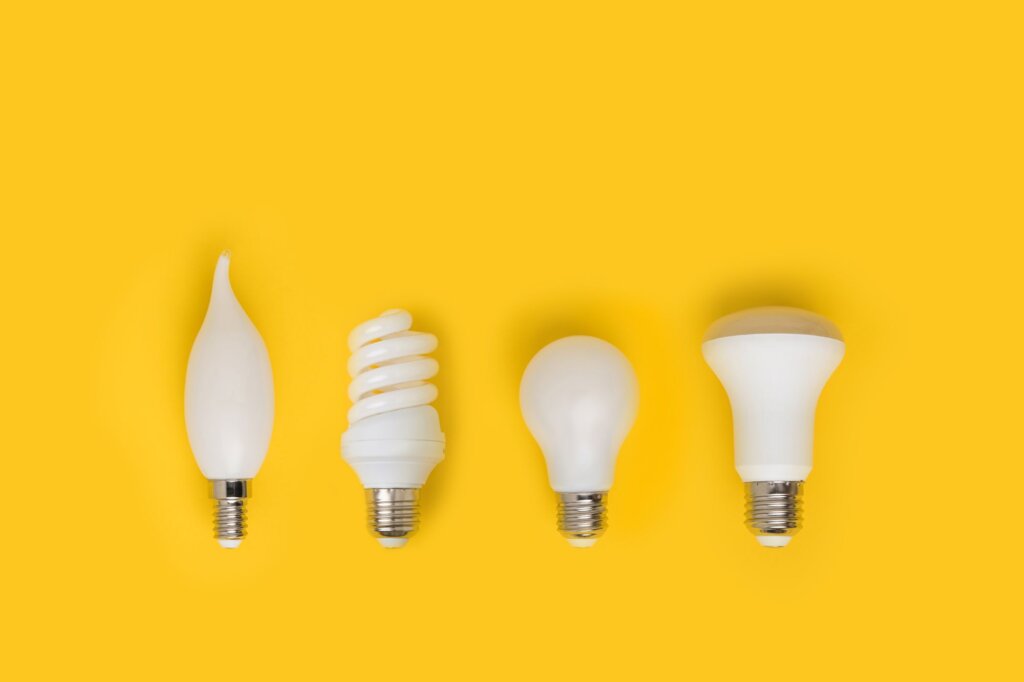
Bulbs come in different shapes and bases, and they are not all interchangeable. Before buying replacements, check the old bulb or fixture.
Common household bulbs are typically A-shaped bulbs (such as A19) for lamps and ceiling fixtures. However, recessed lights might use BR or PAR bulbs, and chandeliers and decorative fixtures sometimes use candle-shaped bulbs.
When in doubt, bring the old bulb with you or take a clear photo of the bulb and fixture label before shopping.
Make Sure the Bulb Works With the Fixture
Not every bulb belongs in every fixture. Outdoor fixtures, bathroom lighting, recessed cans, ceiling fans, and enclosed globes all have specific recommendations. The package should say whether the bulb is suitable for enclosed fixtures, damp locations, wet locations, dimmers, or ceiling fans.
This small check can prevent flickering, early burnout, overheating, or poor performance.
Pay Attention to Dimmable Bulbs
If a fixture is connected to a dimmer switch, choose bulbs labeled as dimmable. Standard LED bulbs might flicker, buzz, or not dim properly when used with dimmer switches.
Even dimmable LED bulbs may not work well with every dimmer. Some older dimmers were designed for dimmable incandescent bulbs and may need to be replaced with an LED-compatible dimmer. If lights flicker, hum, jump in brightness, or don’t dim smoothly, an electrician can help determine whether the issue is the bulb, dimmer, fixture, or outdated wiring.
Decide Whether Smart Bulbs Make Sense for You
Smart bulbs can be very customizable and useful, but they aren’t necessary in every home.
Most smart bulbs allow you to adjust color temperature throughout the day. You might use cooler light while working and warmer light in the evening. Others offer RGB color-changing features, voice control, timers, and automation. They can be a good fit for automated porch lights, office lamps, media rooms, and timed light settings while you’re on vacation.
Before buying smart bulbs, check if they are compatible with your smart home system or require an additional hub or smartphone app.
Choosing Bulbs That Make Your Home Work Better
The right light bulb can make a room feel more comfortable, useful, and finished. Start with lumens for brightness, then choose the color temperature that fits the room. Warm bulbs are usually best for relaxing spaces, neutral bulbs work well for everyday tasks, and daylight bulbs can help in work areas where visibility matters.
Before buying, check the bulb shape, base, fixture rating, dimmer compatibility, and whether the bulb is meant for indoor, outdoor, enclosed, or damp locations. A trusted local electrician, lighting store, or home improvement professional can help with tricky fixtures, flickering lights, dimmer issues, or larger lighting updates.