For many people, eating healthy sounds simple until it’s time to actually do it. Suddenly there are meal plans, grocery lists, cooking schedules, nutrition trackers, and decisions to make at every turn. When hunger hits and time is short, it’s easy to default to whatever is the most convenient.
Instead of trying to overhaul everything at once, a more helpful approach might be to focus on reducing friction (which makes it easier to follow through on healthier choices).
When healthier options are easier to access, quicker to prepare, and already part of your routine, you’re more likely to choose them. The goal is to create small systems that support you throughout the day, even when life gets busy.
Start by Removing Common Barriers
Healthy eating usually breaks down for predictable reasons: There’s no plan. There’s nothing ready to eat. Hunger hits fast, and convenience wins.
Instead of focusing on what you “should” eat, start by identifying what makes healthy choices harder. That might be lack of time, limited options, or relying on last-minute decisions when you’re already hungry.
Reducing friction means setting things up so the better option takes less effort. When food is already washed, chopped, cooked, or within reach, it becomes the natural choice instead of the fallback.
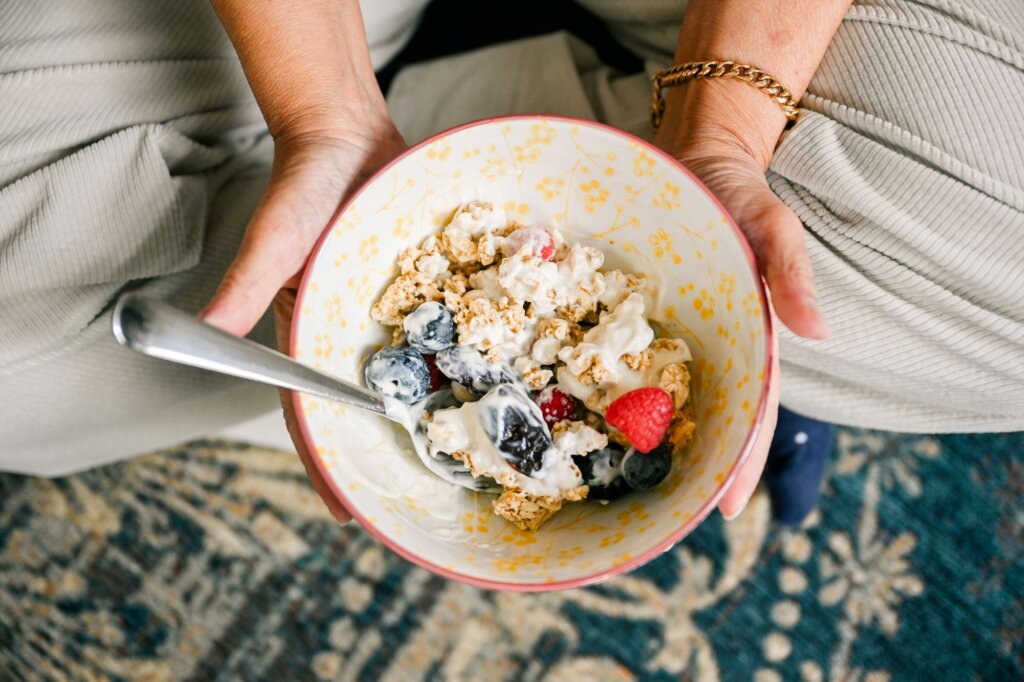
Plan Ahead Without Overcomplicating It
Planning doesn’t have to mean strict meal prep or cooking everything in advance. Even having a loose idea and readily-available ingredients can be helpful.
Try choosing two or three simple breakfasts and lunches for the week. Familiar options reduce decision fatigue and save time. Thinking in components can help too. Cook a protein, prepare a vegetable or two, and keep a starch on hand so meals can come together quickly in different combinations.
A little planning at the beginning of the week typically prevents stress later, especially on days when energy is low or time is tight.
Shop Smarter, Not Longer
Grocery shopping plays a major role in how the week unfolds. What’s available at home often determines what ends up on your plate.
Shopping with a short list and a general plan helps keep things simple. Choose foods you already enjoy and know how to prepare. Focus on items that can be used in more than one meal so nothing feels wasted. For quick snacks, go for things like fruit or nuts instead of ultra-processed foods.
Healthy eating becomes easier when the food is already in your home and easy to grab. If it’s in your kitchen, it’s an option. If it’s prepared, it’s even better.
Make Snacks Work for You
Snacking isn’t a problem. Being unprepared is.
When snacks are planned, they help maintain energy and prevent overeating later in the day. Keeping a mix of protein and fiber on hand can make snacks more satisfying and longer-lasting.
Preparing healthier snacks once or twice a week can also save time and reduce your daily decision-making. Storing them at eye level or packing them ahead of time makes them easier to reach when hunger hits.
Set Yourself Up for Success Outside the Home
Healthy habits don’t stop at the front door. Workdays, school schedules, and travel can all disrupt regular routines if there’s no plan in place. Keep shelf-stable snacks in a bag, desk, or car to prevent long gaps between meals. Looking at restaurant menus ahead of time can also reduce stress when eating out and make it easier to choose something that feels good afterward.
Flexibility matters here. Eating well doesn’t require perfect choices every time! Just know what your options are, especially when circumstances change.
Focus on What You Can Add
One of the easiest ways to make healthy eating feel more approachable is to focus on addition rather than restriction.
Adding fruits or vegetables to meals you already enjoy can improve balance without changing everything. Adding protein to meals that leave you hungry can help with energy and fullness. Even adding a glass of water before reaching for a snack can keep you hydrated and help you feel more satisfied.
These small additions tend to stick because they don’t feel as overwhelming or limiting.
A More Sustainable Approach to Healthy Eating
Healthy eating isn’t all about strict rules or constant self-control. It starts with creating an environment that supports better choices naturally. When you reduce friction through planning, preparation, and flexibility, healthier habits fit more easily into everyday life. And when eating well feels easier, it becomes something you can keep up day after day.
This article is meant for informational purposes and is not meant as a substitute for professional nutrition advice.