Regular grooming helps your dog stay comfortable, neat, and looking fabulous. The right schedule can reduce shedding, prevent painful mats, and even make it easier to spot skin, ear, nail, or coat problems. However, there isn’t one grooming schedule that fits every dog.
A short-haired dog who spends most of the day indoors probably doesn’t need the same grooming routine as a curly-coated dog who loves mud, swimming, and outdoor play. Here are a few ways to figure out the best grooming routine for your dog.
At a Glance
Most dogs benefit from regular brushing, routine nail trims, occasional baths, and periodic haircuts. How often they need professional grooming depends on their coat type, activity level, skin health, age, and how much grooming you can safely handle at home.
Some dogs might only need professional grooming every couple of months, while others need appointments every few weeks to prevent matting, overgrown nails, or coat problems. If your dog’s coat tangles easily, smells unusual, grows long, sheds heavily, or their nails click loudly on the floor, it might be time to adjust their grooming schedule.
Why Doesn’t Every Dog Need the Same Grooming Schedule?
Dogs have different coats, habits, and comfort needs.
A grooming schedule depends on factors like:
- Coat length and texture
- Shedding level
- How easily the coat mats or tangles
- How often the dog gets dirty
- Skin sensitivities or allergies
- Nail growth
- Ear shape and ear health
- Age, mobility, and temperament
A dog with a smooth, short coat may need less frequent brushing and bathing than a dog with a long, curly, or double coat. Dogs who spend a lot of time outdoors can also need more frequent care than dogs who mostly stay inside. The goal is to keep your dog clean, comfortable, and healthy without over-bathing or ignoring small problems.
How Does Coat Type Affect Grooming Needs?
Coat type is one of the biggest factors in grooming frequency.
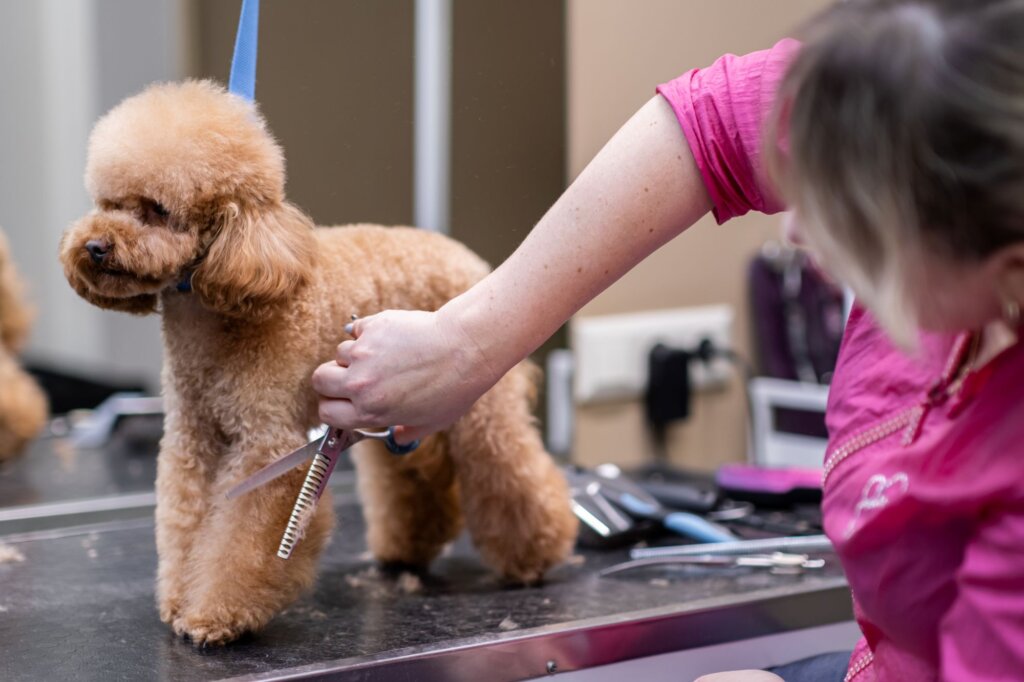
A dog with short hair may only need occasional brushing to remove loose hair and dirt. Dogs with long, silky, or curly coats often require regular brushing and trimming to prevent tangles and mats, especially around the ears, armpits, and backs of the legs.
Here is a simple way to think about it:
| Coat Type | Common Grooming Needs |
|---|---|
| Short, smooth coat | Occasional brushing, baths as needed |
| Double coat | Frequent brushing, especially during shedding seasons |
| Long coat | Regular brushing to prevent tangles and mats, routine professional trims |
| Curly or wavy coat | Frequent brushing and professional trims to prevent matting |
| Wire coat | Coat-specific grooming, which could include hand-stripping or trimming depending on the breed |
Breed can play a role, but coat condition matters more. Even dogs of the same breed can have different grooming needs based on lifestyle, health, and how their coat grows.
How Often Should You Bathe Your Dog?
Bathing frequency also varies per dog. Some dogs only need occasional baths, while others need more baths because they spend a lot of time outside, have specific coat maintenance, or have veterinarian-recommended skin care needs.
A dog might need a bath sooner if they:
- Smell noticeably dirty
- Rolled in something unpleasant
- Have dirt, mud, or debris in their coat
- Have skin folds that need careful cleaning
- Spend a lot of time outdoors
- Have vet-approved skin care needs
For some dogs, too many baths can dry out their skin—especially if the wrong shampoo is used. If your dog has itchy skin, flakes, redness, or recurring odor, it’s smart to check with a veterinarian before increasing baths.
What Grooming Tasks Matter Besides Bathing?
Bathing is only one part of grooming. Dogs also need care for their coat, nails, ears, paws, and sometimes teeth or skin folds. These small tasks can make a big difference in comfort.
Brushing
Brushing removes loose hair, dirt, and dead skin cells. It also helps distribute natural oils through the coat. Many dogs benefit from brushing several times a week, while dogs with mat-prone coats might need daily attention.
For dogs with coats that mat easily, brushing shouldn’t be skipped. Mats can pull on the skin, trap moisture, and become painful.
Nail Trims
If your dog’s nails click loudly on hard floors, catch on fabric, or change the way your dog walks, they’re likely too long.
Some dogs wear their nails down naturally through activity, while others need regular trims. Dogs who dislike nail trims may do better with short, frequent sessions or help from a groomer or veterinarian.
Ear Care
Some dogs need more ear attention than others, especially dogs with floppy ears, allergies, or a history of ear irritation.
Don’t use cotton swabs deep in the ear canal. If you notice odor, redness, discharge, head shaking, or repeated scratching, a veterinarian should take a look.
Paw and Sanitary Trimming
Dogs with longer hair around the paws can collect mud, snow, burrs, or debris. Some dogs also need trimming around their sanitary areas to stay cleaner and more comfortable. This is one reason professional grooming can be useful even if a dog doesn’t need a major haircut.
What Are Signs Your Dog Needs Grooming Sooner?
Your dog may need grooming before the next planned appointment if you notice:
- Tangles or mats forming
- Strong odor that doesn’t improve
- Nails clicking on the floor
- Hair covering the eyes or paw pads
- Excessive shedding
- Dirt or debris stuck in the coat
- Red, itchy, flaky, or irritated skin
- Ears that smell unusual or look irritated
- Your dog licking or chewing at paws or skin
Some of these signs are grooming issues. Others could point to a health concern. If your dog seems uncomfortable, has skin irritation, or shows sudden changes in coat condition, contact your veterinarian.
Can You Handle Grooming at Home?
Many routine grooming tasks can be handled at home if both you and your dog are comfortable.
At-home grooming can include:
- Brushing
- Wiping paws
- Cleaning skin folds carefully
- Bathing with dog-safe shampoo
- Checking ears for visible irritation
- Light trimming, if you know how to do it safely
Some grooming tasks are better left to a professional, especially if your dog is anxious, heavily matted, difficult to handle, or needs breed-specific coat care.
Never cut out tight mats with scissors close to the skin. It can be hard to tell where the mat ends and the skin begins, and accidental cuts can happen quickly.
When Is Professional Grooming Worth It?
Professional grooming can be helpful when your dog needs more than basic brushing or bathing.
It can be especially useful for dogs with:
- Long, curly, or high-maintenance coats
- Heavy seasonal shedding
- Fast-growing nails
- Thick hair between the paw pads
- Coat matting
- Grooming anxiety
- Breed-specific trimming needs
- Mobility issues that make home grooming harder
A professional groomer can also help you understand what schedule makes sense for your dog. Some dogs do best with shorter, more frequent appointments, while others can go longer between visits if their coat is maintained at home.
A Simple Grooming Schedule Starting Point
Every dog is different, but this can help you begin thinking through a routine.
| Grooming Need | Possible Schedules |
|---|---|
| Brushing for short coats | Weekly or as needed |
| Brushing for long, curly, or mat-prone coats | Multiple times a week or daily |
| Bathing | Every few weeks to every few months, depending on the dog |
| Nail trims | Often every few weeks, depending on growth and activity |
| Professional grooming | Every 4 to 12 weeks, depending on coat type and at-home maintenance |
| Ear checks | Weekly visual checks, with cleaning only as recommended |
If your dog stays clean and comfortable, your schedule is likely working. If you’re constantly finding tangles, odor, overgrown nails, or skin irritation, the schedule probably needs adjusting.
Common Grooming Mistakes to Avoid
A few small mistakes can make grooming harder for both you and your dog.
Avoid:
- Waiting until mats become painful
- Bathing too often without considering skin health
- Using human shampoo on dogs
- Ignoring nail growth
- Skipping brushing between professional appointments
- Cutting mats close to the skin with scissors
- Assuming short-haired dogs don’t need grooming
- Waiting until your dog is stressed before introducing grooming tools
It helps to make grooming feel normal for your dog. Desensitizing them with short, calm brushing sessions can be easier than waiting until your dog needs a full cleanup.
Frequently Asked Questions
How often should most dogs go to the groomer?
Many dogs see a groomer every 4 to 12 weeks, but the right schedule depends on the dog’s coat, lifestyle, and at-home care. Dogs with curly, long, or mat-prone coats often need more frequent appointments.
Do short-haired dogs need grooming?
Yes. Short-haired dogs may not need haircuts, but they still benefit from brushing, baths as needed, nail trims, ear checks, and skin checks.
How do I know if my dog is being bathed too often?
Signs can include dry skin, flaking, itching, or a dull coat. If your dog has skin problems or recurring odor, check with a veterinarian before changing the bathing schedule.
Should I brush my dog before or after a bath?
In many cases, brushing before a bath helps remove loose hair and tangles. Bathing a matted coat can make mats tighter and more difficult to remove, so it’s better to address tangles first when possible.
What if my dog hates grooming?
Start small. Short brushing sessions, treats, calm handling, and lots of positive reinforcement can help. If your dog is very anxious or reactive, a professional groomer or veterinarian can help you find a safer approach.
A Grooming Schedule Should Start With Your Dog’s Needs
The best grooming schedule isn’t based on a calendar alone. It’s based on your dog’s coat, comfort, health, and daily life.
Start with your dog’s actual needs. Pay attention to their coat, nails, ears, skin, and comfort between appointments. If you’re unsure, a trusted local groomer or veterinarian can help you build a routine that keeps your dog feeling their best.
This community resource is made possible through the generous support of local WhirLocal sponsors.