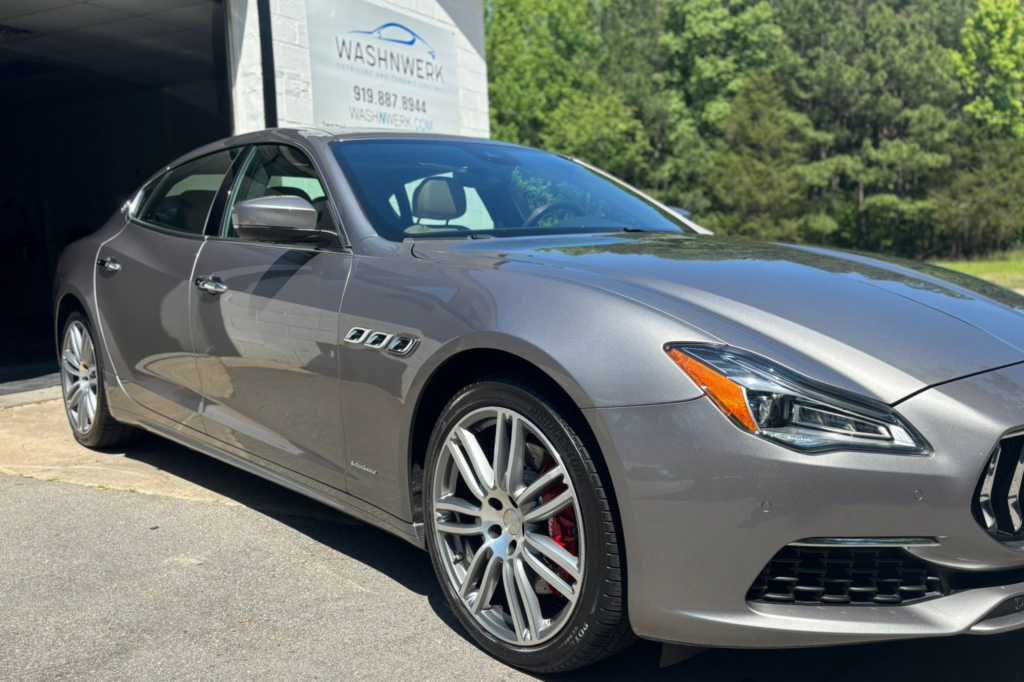
Paint correction restores gloss by refining defects such as swirl marks, light scratches, oxidation, and haze without aggressively removing clear coat. The goal is controlled improvement: reduce defects that scatter light while preserving as much of the vehicle’s existing protective finish as practical.
For drivers around Garner, NC, this approach can help vehicles exposed to sunlight, humidity, pollen, rain, and road contamination. Over time, washing and environmental exposure can leave fine marring that makes otherwise healthy paint appear dull.
What Actually Reduces Paint Gloss?
Clear coat provides the smooth surface that reflects light. When microscopic scratches and other imperfections disrupt that surface, light scatters instead of producing sharp reflections.
Why Polishing Can Improve Clarity
Paint correction uses machine polishing and carefully selected compounds or polishes to refine the surface. A lighter polish may improve gloss and clarity when paint has minor marring, while intensive correction may suit heavier imperfections.
The important distinction is that correction should be based on the condition of the paint rather than simply trying to make every defect disappear.
Why Preserving Clear Coat Matters
Clear coat is a finite protective layer. Removing unnecessary material to chase every deep scratch can leave less protection over the underlying color coat.
Not Every Scratch Should Be Fully Removed
Some defects extend too deeply into the clear coat to be safely polished away. A measured approach may improve their appearance without attempting complete removal. Evaluating the finish before correction matters.
Drivers can help preserve corrected paint by using proper washing techniques, clean microfiber materials, and methods that minimize additional surface marring.
Harsh Conditions Can Add Surface Wear
North Carolina’s sun, humidity, pollen, rain, and road contaminants can contribute to paint deterioration and visible surface defects. Regular exposure does not automatically require aggressive correction. The appropriate approach depends on paint condition, defect depth, vehicle age, and desired results.
Can Paint Correction Improve Gloss Naturally?
Paint correction can enhance gloss without creating an artificial appearance when surface defects are refined carefully. For more insight, read Why Can Paint Correction Improve Gloss Without Making Paint Look Artificial to learn how controlled correction can preserve a natural-looking finish.
How WashNWerk Approaches Paint Correction
WashNWerk Detailing and Ceramic Coatings offers paint correction as part of its vehicle care services. Its published correction options range from lighter polishing to more intensive multi-stage work, with decontamination included in its correction process.
That condition-focused approach reflects an important principle: paint correction is not simply about removing as many imperfections as possible. It is about determining what can realistically be improved while treating the existing finish carefully.
The Takeaway
Paint correction can restore gloss by refining defects that interfere with light reflection without unnecessarily removing clear coat. Matching the polishing approach to the paint’s condition helps balance visual improvement with surface preservation.
For Garner drivers considering paint correction, WashNWerk Detailing and Ceramic Coatings can evaluate the existing finish and help determine an appropriate correction approach for the vehicle.
Featured Place
WashNWerk – Car Detailing, Ceramic Coatings, and Paint Protection Film
3309 Century Farm Rd
Rolesville, North Carolina 27571
(919) 276-5416