Ceramic window tinting is designed to manage solar heat through advanced film construction that can reject significant amounts of infrared energy without relying on the dark appearance associated with some traditional window films. Conventional dyed or metalized films can also reduce sunlight and heat, but their performance characteristics differ depending on their composition and construction.
For drivers in Wilmington, NC, controlling heat entering the cabin can be especially relevant during warm, sunny conditions. A vehicle sitting in direct coastal sunlight can quickly become uncomfortable, making solar heat management an important consideration for everyday driving.
What Is Infrared Heat?
Sunlight contains different types of energy, including visible light, ultraviolet radiation, and infrared radiation. Infrared energy is strongly associated with the heat experienced inside a vehicle when sunlight passes through its windows.
Ceramic Window Tinting can be engineered to reduce the amount of this energy entering the cabin. The exact level of infrared rejection varies between film technologies and individual products, so published specifications should be considered when comparing options.
How Do Traditional Films Manage Heat?
Traditional dyed films primarily use dye to absorb portions of incoming solar energy. Metalized films use microscopic metallic particles that can reflect or reject some solar energy.
These technologies can provide useful heat and glare reduction, but their optical properties and performance can differ. Metalized films may also affect radio, GPS, or other electronic signals depending on their construction.
How Does Ceramic Window Tinting Differ?
Ceramic films use nonmetallic ceramic particles engineered to interact with solar radiation. Rather than depending primarily on dark coloration, ceramic technology can provide solar control while maintaining relatively clear visibility at comparable levels of visible-light transmission.
The practical benefit is not simply a darker window. A properly selected film can help reduce solar heat entering the cabin while also providing UV protection and glare management.
Why Does Wilmington’s Climate Matter?
Wilmington’s warm climate and coastal sunlight can create substantial solar exposure during daily commutes, errands, and road trips. Reducing infrared energy entering through the side and rear windows can make the cabin feel more manageable, particularly when the vehicle is parked outdoors.
Window tint should still be viewed as one part of overall heat management. Parking in shade, using a windshield sunshade, and allowing the air-conditioning system to circulate can complement the film.
A Local Perspective on Ceramic Window Tinting
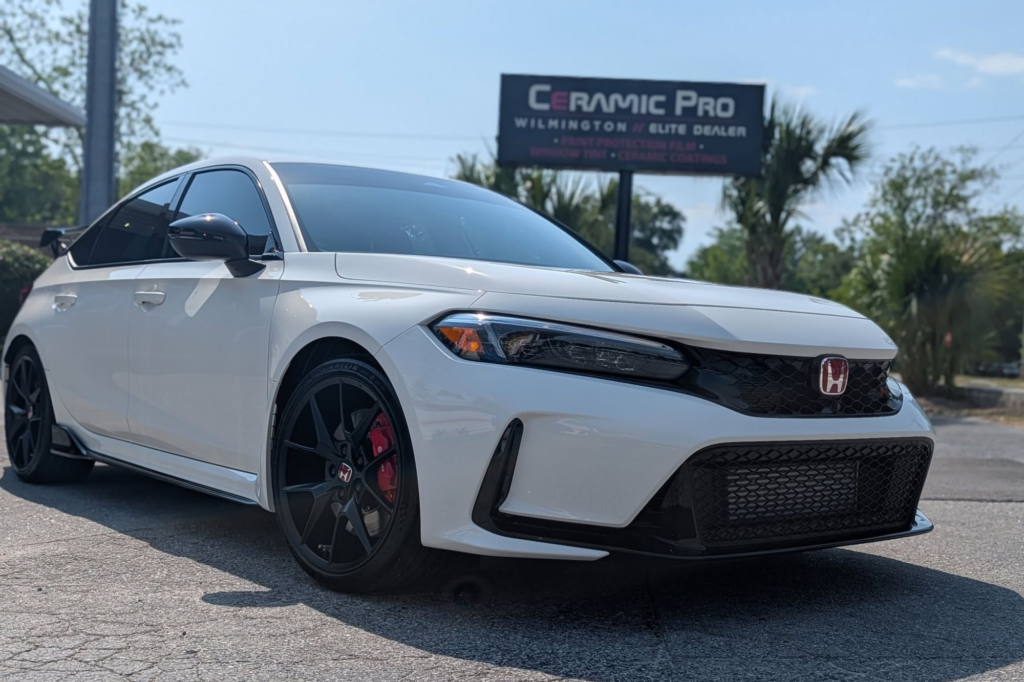
Ceramic Pro Wilmington provides vehicle protection services for local drivers considering different window film technologies. Comparing visible-light transmission, infrared performance, UV protection, and overall film construction can help vehicle owners select an option based on their actual driving needs.
The Takeaway
Ceramic window tinting and traditional films can both reduce solar exposure, but they use different technologies to manage incoming energy. Ceramic films are particularly designed to control infrared heat while maintaining optical clarity without depending solely on darker coloration.
For Wilmington drivers exploring solar heat management, Ceramic Pro Wilmington offers a local resource for learning about ceramic window film options.
Featured Place
Ceramic Pro Elite Wilmington | Ceramic Coating | PPF | Window Tint
4514 Park Ave
Wilmington, North Carolina 28403
(910) 490-4041