Kitchen countertops set the tone for the room, handle daily wear, and play a big role in how easy your kitchen is to use. Between morning coffee, weeknight dinners, homework, meal prep, and the occasional stack of mail, countertops tend to become part workspace, part gathering place. That’s why the countertop’s material can be so important.
Choosing the right material can feel tricky because there are so many options. Some are known for durability. Some are loved for their natural beauty. Others are budget-friendly, low-maintenance, or easy to customize. The best choice depends on how your household actually uses the kitchen.

Start With Your Everyday Habits
Before falling in love with a countertop sample, think about what happens in your kitchen on a normal day. Do you cook often? Do you set hot pans on the counter? Are there kids helping with snacks or crafts? Do you want something that looks polished with very little upkeep?
A busy family kitchen likely needs a surface that resists stains and scratches. Someone who loves baking may care more about a smooth, cool surface for rolling dough. Someone planning a full kitchen remodel might want countertops that coordinate with new cabinets, flooring, backsplash, and lighting.
Looks matter, of course, but daily function should lead the decision.
Quartz: Durable and Low Maintenance
Quartz is a popular choice for homeowners who want a clean look with dependable performance. It is engineered using natural quartz combined with resins and pigments, which gives it a consistent appearance and a wide range of color options.
One of the biggest benefits of quartz is that it doesn’t need to be sealed like some natural stone surfaces. It resists many common stains and is fairly easy to clean with mild soap and water. That makes it a strong option for busy households that want something attractive without adding much maintenance to the routine.
Quartz is also generally resistant to scratches and chips, though it isn’t damage-proof. Heavy impacts along edges or corners can still cause chipping, and cutting directly on the surface is not recommended. It is also important to use trivets or hot pads when handling hot pans. Quartz can handle everyday kitchen use well, but high heat can damage the resins in the material and may leave discoloration or marks.
Best for: Homeowners who want a polished look, lower maintenance, and reliable stain resistance.
Things to consider: Quartz is not the best surface for setting down hot pans, and repairs to chips or heat damage may be noticeable depending on the color and pattern.
Granite: Natural Stone With Character
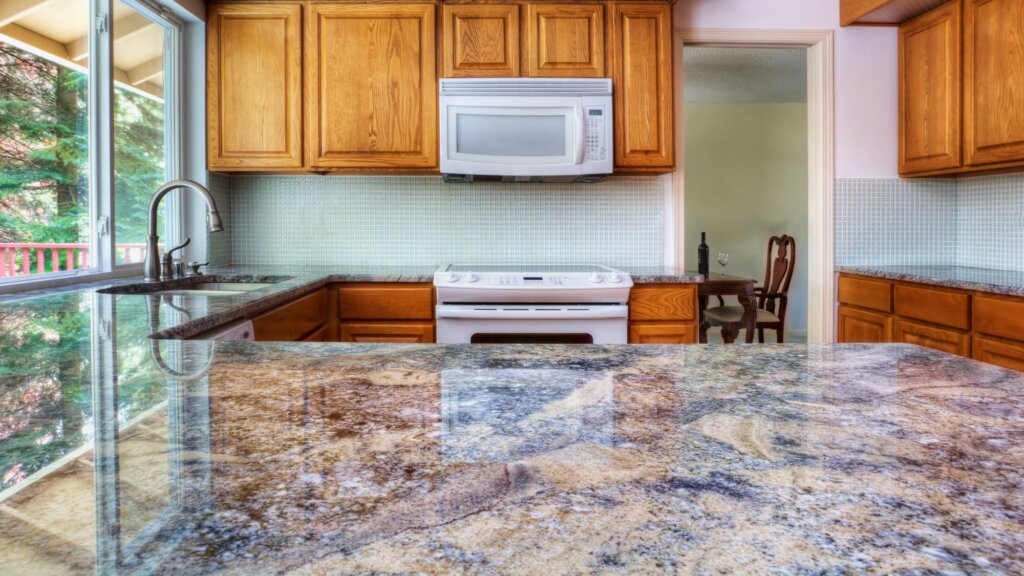
Granite has been a trusted countertop choice for years, and for good reason. It is strong, naturally heat-resistant, and each slab has its own pattern. If you like natural variation, granite can bring depth and character to a kitchen.
Granite performs well in active kitchens, especially when it is properly sealed. It can handle heat better than many other countertop materials, though using trivets is still a smart habit to protect the finish and avoid thermal shock. It is also resistant to scratches, but knives can dull quickly on stone, so cutting boards are still recommended.
Granite can stain if it is not sealed correctly or if spills sit too long. Oils, wine, coffee, and acidic foods should be wiped up quickly. Edges and corners can chip if hit with something heavy, but many chips can be repaired by a professional.
Best for: Homeowners who want a durable natural stone surface with one-of-a-kind movement and strong heat resistance.
Things to consider: Granite usually needs sealing, and the natural variation means the full slab may look different from a small sample.
Marble: Beautiful, But More Delicate
Marble is known for its elegant veining and timeless appearance. It can make a kitchen feel bright, classic, and refined. It is also softer and more porous than many other countertop materials, which means it can stain, scratch, chip, or etch more easily.
Etching can happen when acidic foods or drinks, such as lemon juice, vinegar, tomatoes, or wine, sit on the surface. These marks are not always stains, but instead dull spots where the surface has reacted with the acid. Marble can also scratch more easily than granite or quartz, so cutting boards are important.
Marble has decent heat resistance, but hot pans can still affect the finish or cause discoloration in some cases. Trivets or hot pads are recommended. For some homeowners, the natural aging of marble is part of its charm. For others, those marks may feel frustrating.
Best for: Homeowners who love a classic, natural look and are comfortable with a surface that may develop character over time.
Things to consider: Marble requires more care than many other options and may not be the most forgiving choice for a high-traffic family kitchen.
Butcher Block: Warm, but Higher-Maintenance
Butcher block countertops bring warmth to a kitchen and can soften the look of harder surfaces like tile, stone, or metal. They work especially well in farmhouse, cottage, traditional, and casual kitchen designs.
Wood countertops can be useful for prep areas, islands, or accent sections. They are easier on dishes than stone and can sometimes be sanded or refinished if they become scratched or worn. That said, butcher block countertops need regular care to protect it from moisture, stains, and cracking.
Heat can easily scorch wood, so hot pans should not be placed directly on the surface. Water is another concern. Standing moisture around sinks, dish racks, or seams can cause swelling, staining, or damage if the surface is not properly sealed and maintained. Cutting directly on butcher block may feel convenient, but it will leave marks unless the surface is maintained as a working cutting surface.
Best for: Homeowners who want warmth, natural texture, and a surface that can be refreshed over time.
Things to consider: Butcher block needs consistent upkeep and is more vulnerable to water, heat, and stains than stone or quartz.
Laminate: Budget-Friendly (and Better Than Many People Remember)
Laminate countertops have come a long way. Today’s options include patterns that resemble stone, wood, and other higher-end surfaces at a more affordable price point.
Laminate is lightweight, available in many colors, and usually easier on the budget than stone or engineered materials. It can be a smart choice for rental properties, starter homes, or kitchen updates where cost is a major factor.
The tradeoff is durability. Laminate is not as heat-resistant as stone, quartz, or tile, so hot pans can burn, discolor, or bubble the surface. It can also scratch or chip, especially along edges and seams. Once laminate is damaged, repairs are usually more limited than with materials that can be polished, sanded, or patched more easily.
Laminate does resist many everyday spills, but seams can be vulnerable if water gets underneath. This is especially important around sinks.
Best for: Homeowners who want an affordable, attractive update without the cost of stone or custom surfaces.
Things to consider: Laminate is more sensitive to heat, scratches, and edge damage, and major damage can be difficult to repair cleanly.
Solid Surface: Smooth and Versatile
Solid surface countertops are made from man-made materials and are known for their smooth, seamless appearance. They come in many colors and patterns, and small scratches can often be repaired more easily than with some other surfaces. This material can be a good fit for homeowners who want a clean, simple look.
Solid surface countertops are generally nonporous, which helps with stain resistance and everyday cleanup. They can scratch, but minor surface marks can be buffed out by a professional or, in some cases, with proper homeowner care. They are not as heat-resistant as stone, so hot pans should not be placed directly on them. High heat can scorch, discolor, or damage the surface.
Chipping is less common than with some brittle materials, but dents, scratches, and heat marks can still happen with rough use.
Best for: Homeowners who want a smooth, low-maintenance surface with repairable minor scratches and a seamless look.
Things to consider: Solid surface materials need protection from heat and may show scratches more easily in darker colors.
Think About Maintenance Before You Decide
Every countertop material needs some kind of care. The question is how much maintenance you are willing to take on. If your kitchen sees a lot of spills, school projects, guests, and quick weeknight meals, a low-maintenance surface may be worth the investment.
Ask clear questions before choosing a material: How should it be cleaned? Can it handle heat? Does it stain easily? Can scratches be repaired? Does it need re-sealing? A reputable countertop installer or stone supplier should be able to walk you through those details without making the decision feel overwhelming.
Work With Professionals Who Know the Details
Countertop installation requires careful measuring, cutting, leveling, and support. Even a beautiful material can cause problems if it is not installed correctly. Cabinets need to be ready, sinks and appliances need to be accounted for, and the surface must be properly supported.
Working with experienced countertop installers, stone suppliers, and remodelers can help homeowners avoid costly mistakes. They can also help compare samples, explain lead times, and make sure the selected material works with the full kitchen plan.
Choosing a Surface You’ll Be Happy With
The right countertop should fit your home’s style, your budget, and the way your kitchen is used every day. Quartz, granite, marble, butcher block, laminate, and solid surface materials all have their place. The best option is the one that feels manageable and practical for your household.
Before making a final choice, see larger samples when possible, ask about maintenance, and talk through installation details with a trusted local professional. A well-chosen countertop can make your kitchen more useful, more comfortable, and easier to enjoy for many years.