Few things are more frustrating than hearing your air conditioner running only to realize your home isn’t getting any cooler. Before assuming the worst, it’s worth knowing that many cooling problems have straightforward causes. Some can be safely checked yourself, while others require the expertise of a qualified HVAC professional.
This guide explains why your AC might be running without cooling, what you can inspect safely, and when it’s time to call for help.
Quick Answer
If your air conditioner is running but not cooling, the problem could be as simple as an incorrect thermostat setting, a clogged air filter, or blocked vents. In other cases, the issue may involve refrigerant, electrical components, or a failing compressor that should be diagnosed by a qualified HVAC professional.
The key is knowing which situations are safe to investigate and which are better left to an expert.
How Can an Air Conditioner Run Without Cooling?
Your air conditioner does more than blow air. It removes heat from inside your home and releases it outdoors through a series of components working together.
Sometimes the indoor fan continues circulating air even though the cooling process has stopped. That’s why you may still feel airflow from the vents, but the air isn’t as cool as it should be.
Several different issues can interrupt this process, ranging from simple maintenance needs to mechanical failures.
What Can You Check Yourself First?
A few basic checks may help identify the problem without requiring specialized tools.
Check the Thermostat
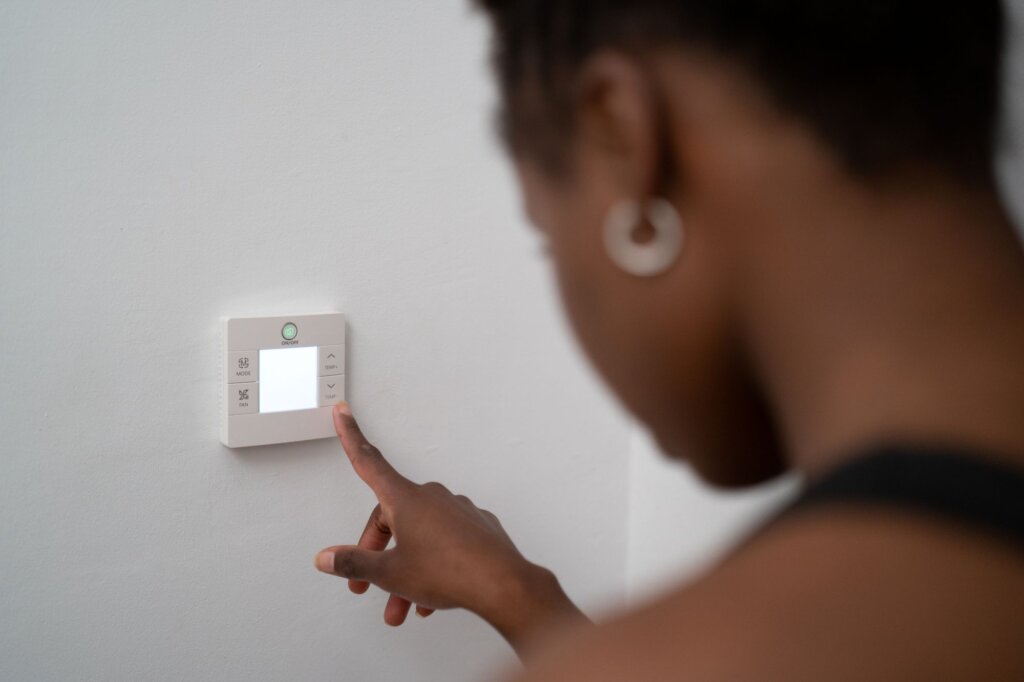
Start with the simplest possibility. Make sure the thermostat is set to Cool rather than Fan and that the temperature is set below the current room temperature.
If your thermostat uses batteries, replacing weak batteries may also resolve unexpected behavior.
Inspect the Air Filter
A dirty air filter can restrict airflow, making it harder for your system to cool your home efficiently.
Many manufacturers recommend replacing disposable filters every one to three months, although the ideal schedule depends on your system, indoor air quality, pets, and how often your AC runs.
Make Sure Vents Are Open
Walk through your home and confirm that supply and return vents aren’t blocked by furniture, rugs, or curtains.
Restricted airflow can reduce comfort and place unnecessary strain on your HVAC system.
Check the Circuit Breaker
If either the indoor or outdoor portion of the system has lost power, cooling performance can suffer.
If a breaker has tripped once, resetting it may restore operation. If it trips again, avoid repeatedly resetting it and contact an HVAC professional to identify the underlying problem.
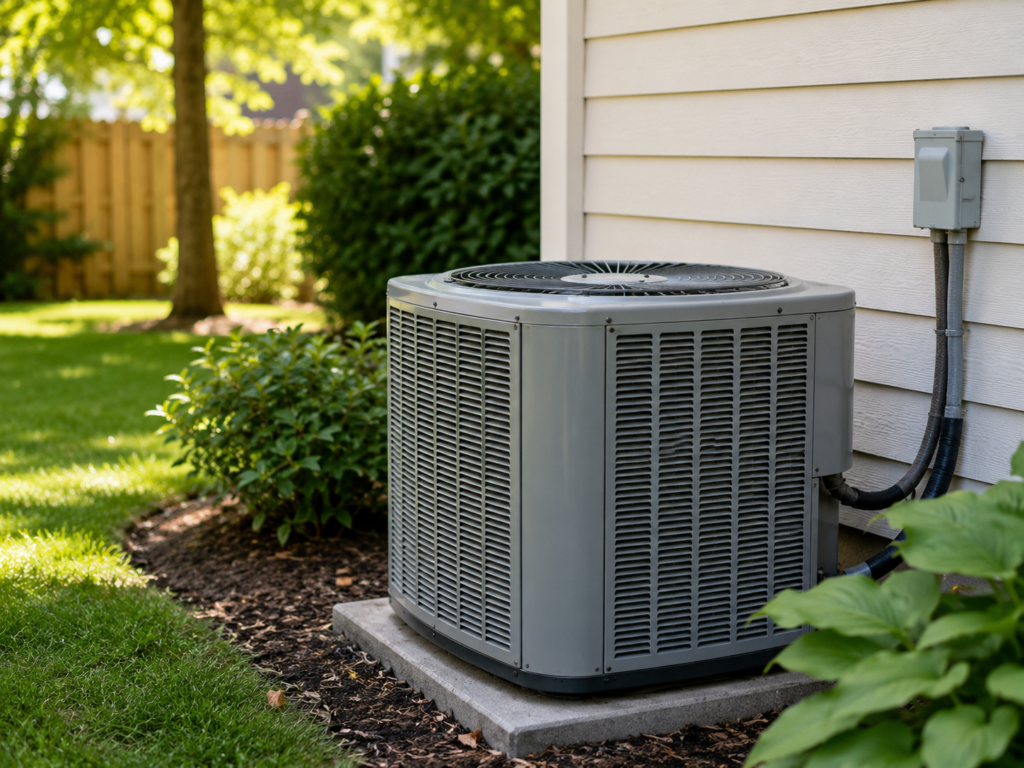
Look Around the Outdoor Unit
The outdoor condenser needs adequate airflow to release heat effectively.
Leaves, grass clippings, weeds, and other debris can reduce performance. Keeping the area around the unit clear helps it operate more efficiently.
Avoid opening the unit or attempting internal repairs.
What Problems Usually Require a Professional?
If the basic checks don’t solve the issue, the problem may involve components that require specialized tools and training.
Common examples include:
- Low refrigerant caused by a leak
- Frozen evaporator coils
- Dirty condenser coils that require professional cleaning
- A failed capacitor
- Compressor problems
- Electrical faults or damaged components
These issues often require proper testing to determine the exact cause. Attempting repairs without the necessary experience can create safety risks or lead to additional damage.
When Is It Time to Call an HVAC Professional?
Scheduling service is usually the best next step if you notice any of the following:
- Warm air coming from every vent
- Ice forming on the indoor or outdoor unit
- Unusual grinding, buzzing, or banging noises
- Burning odors
- The system runs continuously without lowering the indoor temperature
- The circuit breaker repeatedly trips
- Water is leaking around the indoor unit
These symptoms often indicate problems that go beyond routine homeowner maintenance.
Could It Be Time to Replace the System?
Not every repair means your air conditioner needs to be replaced.
However, replacement may be worth discussing if:
- Your system is around 15 to 20 years old.
- Repairs are becoming more frequent.
- Energy bills continue to increase without another clear explanation.
- A major repair represents a significant percentage of the cost of a new system.
A qualified HVAC professional can help you compare repair and replacement options based on your system’s age, condition, and expected lifespan.
How Can You Help Prevent Cooling Problems?
Routine maintenance can reduce the likelihood of unexpected breakdowns and help your system operate more efficiently.
Simple habits include:
- Replace or clean air filters as recommended.
- Keep supply and return vents unobstructed.
- Remove debris from around the outdoor condenser.
- Schedule professional maintenance before the cooling season begins.
- Pay attention to changes in airflow, unusual noises, or inconsistent temperatures.
Addressing small concerns early may help prevent larger and more expensive repairs later.
Frequently Asked Questions
Why is my AC blowing warm air?
Warm air can result from thermostat settings, restricted airflow, refrigerant issues, frozen coils, electrical problems, or other mechanical failures. Starting with the simple checks in this guide can help narrow down the cause.
Can a dirty air filter prevent my home from cooling?
Yes. A clogged filter restricts airflow, which can reduce cooling performance and, in some cases, contribute to frozen evaporator coils.
Should I turn my AC off if it’s frozen?
In many cases, yes. Continuing to run a frozen system can make the problem worse. Turn the system off and contact an HVAC professional if the ice doesn’t melt or returns after restarting.
How long should it take for my home to cool?
The answer depends on outdoor temperatures, insulation, home size, humidity, and your system’s capacity. During extremely hot weather, it’s normal for an air conditioner to run longer than usual.
Is it safe to keep running my AC if it isn’t cooling?
If the system is blowing warm air, making unusual noises, producing burning smells, or repeatedly tripping the breaker, it’s generally best to turn it off and have it inspected before further operation.
Bottom Line
An air conditioner that runs without cooling doesn’t always mean you need a major repair. Many issues begin with simple problems like thermostat settings, clogged filters, or restricted airflow.
Start with the safe checks you can perform yourself. If your system still isn’t cooling properly or shows signs of a more serious problem, a qualified local HVAC professional can help diagnose the issue and recommend the most appropriate solution.
This community resource is made possible through the generous support of local WhirLocal sponsors.