A look at how Kirk Harris and All American Sod have spent nearly five decades growing healthier grass, a stronger landscape, and a true Utah family business.
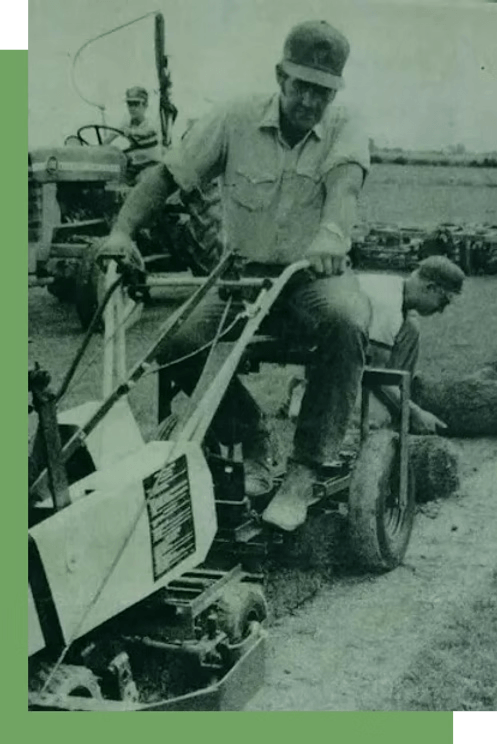
Kirk Harris still remembers Christmas mornings spent stacking sod by hand, fingers in the cold dirt, hands frozen, helping his father change sprinklers on the farm they were building together. He was 10 years old at the time, and he recalls those days as the highlight of his life. “That was the highlight of my life to be out with dad working,” Kirk says. Nearly five decades later, that same farm in central Utah has grown into All American Sod, a 340-acre operation that supplies green lawns to homes, schools, and public buildings across the entire state.
Built to Keep Utah Green
All American Sod delivers across the whole state, sending trucks in every direction every day. Homeowners, landscapers, municipalities, and contractors all sit on their customer list. Some need a single roll for a small patch in the yard. Others order by the pallet, by the square foot, or by the full job. The team handles delivery, so the grass arrives cut, palletized, and ready to install.
The reach is broad, but the focus stays simple: get healthy grass on the ground and keep it there for years. “We sell to homeowners, municipalities, landscapers, the whole gamut,” Kirk says. The farm has supplied sod for the Utah State Capitol grounds, along with schools, churches, temples, and neighborhoods across the state of Utah.
A Family Farm That Grew Into a Legacy
The story started 49 years ago when Kirk’s father planted the first acres of turf. By age 10, Kirk was already in the field helping out. By 1991, he had taken over daily operations, brought along a business degree, and begun building the company into what it is today.
That growth has been steady. The farm expanded. A trucking company joined the operation. A decorative rock and gravel business came next. Then a topsoil and compost line. Each new piece grew from the same root system: a family that understood the land and wanted to do right by it.
“I got my degree in business, and so that helped me to be able to run the business,” Kirk says. “We’ve actually expanded into multiple other businesses.” Forty-nine years in, All American Sod stands as a true Utah family operation, with the next chapter still being written on the same Richfield soil where it all began.
The Richfield Soil Story
Most callers want to know why the grass looks the way it does. Kirk hears the same line on repeat. A new homeowner installs an All American lawn, and a few weeks later the neighbors start knocking.
“They say, my lawn is really dark green and beautiful, and I don’t know why. And my neighbors are getting upset with me because theirs isn’t as dark green as mine,” Kirk says. “So I’m calling to find out if you know why.”
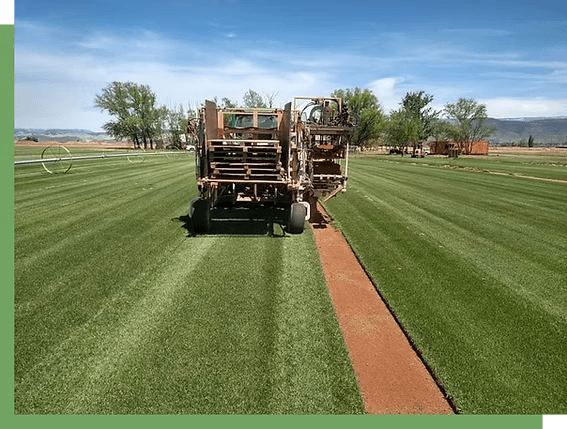
The answer sits in the soil. The farm grows its turf in Richfield, a town named for the deep red, iron-rich earth that defines the area. Thousands of years of nutrients, locked up in that soil, travel with every roll of sod the farm cuts. Once that turf gets laid down in Salt Lake, Provo, or anywhere else in the state, the iron slowly releases into the grass over years. “It’s kind of like a slow-release vitamin that just releases to all the plants, for years and years and years,” Kirk says.
For homeowners who want the same effect in their gardens or new lawns, All American also sells Ferrozite topsoil and organic wood compost. Both grew out of the same idea: feed the ground, and the ground will feed the plants.
A Voice for Grass and Utah’s Environment
Forty-nine years on a sod farm will turn anyone into a teacher. Kirk has spent the last three years walking the halls of the Utah State Legislature, asking lawmakers to think twice before pulling grass out of the landscape. His message is short, and he repeats it the same way every time: “Grass equals photosynthesis, which equals precipitation.”
Grass naturally covers about 82 percent of the landmass, and that living plant cover keeps temperatures lower, pulls carbon and dust out of the air, and recycles moisture back into the atmosphere. Strip grass out, replace it with rock or artificial turf, and Kirk says the effects compound. Heat islands form. Local rainfall drops. Drought conditions get worse, not better.
Schools and neighborhoods near large artificial turf installations have called him about surface temperatures climbing past 140 degrees on hot summer afternoons. “The homeowners nearby are just getting roasted,” he says.
To share that knowledge with anyone who wants it, Kirk started askthelawndoctor.com, a free educational resource where homeowners can learn how grass works, why it matters, and how to take care of it. The site has become a quiet authority piece for the industry and a soft front door to the farm itself.
The Road Ahead
Kirk sees a turning point coming. Cities like Las Vegas and parts of Arizona, after years of replacing lawns with rock, have started to reverse course as heat islands grow and summer moisture disappears. Utah, in his view, has the chance to learn from that and protect its grass while there is still time.
For All American Sod, that means more new homes to supply, more older xeriscape and artificial turf yards to convert back to living lawn, and more chances to keep teaching Utahns what healthy grass actually does for a community. After 49 years, the family farm in Richfield is still in growth mode, and Kirk has no plans of slowing down.
Connect With All American Sod
For anyone in Utah looking to bring a healthier lawn back to a home, school, or business, All American Sod delivers statewide from the family farm in Richfield.
Website: https://www.allamericansod.com/